
Fans of Taylor Jenkins Reid, Emily Henry, and Emily Griffin will fall in love with this woman’s fiction debut.
LOVE, ME
by Jessica Saunders
Union Square & Co., January 2024
(via Sterling Lord Literistic)
 “Love, Me.” It’s how Jack always signed his letters to Rachel. She hadn’t thought about that in years…
This is the story of Rachel Miller, a lawyer and mother of two who’s just as comfortable in the courtroom as she is on the sidelines of the soccer field. Rachel’s life is unexpectedly thrust into the spotlight when photographs and letters of her and her high school boyfriend, the famous actor Jack Bellow, are published in a tabloid. Rachel’s life is upended as this newfound attention calls into question her relationship with her husband, her career, and even her superstar ex.
LOVE, ME takes readers on a journey through key moments in Rachel’s life: falling in love for the first time and having her heart broken; meeting her future husband and creating a life with him; and navigating the celebrity gossip circuit and her equally gossipy suburban frenemies. Betrayed by someone she trusted and reunited with the man she tried so hard to forget, Rachel has to ask herself, “How did I get here? And where am I going?”
A pitch-perfect exploration of modern married life, Jessica Saunders’s deliciously readable novel embraces the truth that some old flames can’t be snuffed out, no matter how many years go by.
Jessica Saunders is a lawyer and writer living in the suburbs of New York City.
 Kristine Ervin was just eight years old when her mother, Kathy Sue Engle, was abducted from an Oklahoma mall parking lot and violently murdered in a nearby oil field. In the shadow of that incomprehensible act, first there was grief. Then, the desire to know: what happened to her, what she felt in her last, terrible moments, and all she was before these acts of violence defined her life. As more information about her mother’s death comes to light, Kristine’s drive to know her mother only intensifies and winds its way into her own fraught adolescence. In the process of both, Kristine butts up against contradictions of what a woman is allowed to be—a self outside of the roles of wife, mother, daughter, victim—what a “true” victim is supposed to look like, how complicated and elusive justice really is, and how we are meant to accept what cannot/should not be accepted.
 HOW TO RAISE AN EMOTIONALLY MATURE CHILD will teach parents how to give children what they need to grow into emotionally mature, capable adults who are wellsituated for happiness, lasting relationships, and success. Emotional maturity matters because it gives people resilient emotional range, flexible thinking, and inner resources for dealing with stress. On the flip side, emotional immaturity leads to an insecure sense of self, trouble creating satisfying, long-term relationships, and leaves those individuals vulnerable to other emotionally immature people. With step-by-step instructions from an expert in the category, parents will feel equipped to give their children what they need to lay the foundation for a happy, successful future, and strengthen their children from the inside out.
 Jane Pool likes her safe, suburban existence just fine. She has a house, a family, (an infuriating mother-in-law,) and a quiet-if-unfulfilling administrative job at the local college. Everything is wonderfully, numbingly normal. Yet Jane remains haunted by her past: her mercurial, absent mother, her parents’ secrets, and the act of violence that transformed her life. When her estranged twin, Lila, makes contact, claiming to know where their mother is and why she left all those years ago, Jane agrees to join her, desperate for answers and the chance to reconnect with the only person who really knew her true self. Yet as the hunt becomes treacherous, and pulls the two women to the earth’s distant corners, they find themselves up against their mother’s subterfuge and the darkness that always stalked their family. Now Jane stands to lose the life she’s made for the one that has been impossible to escape.
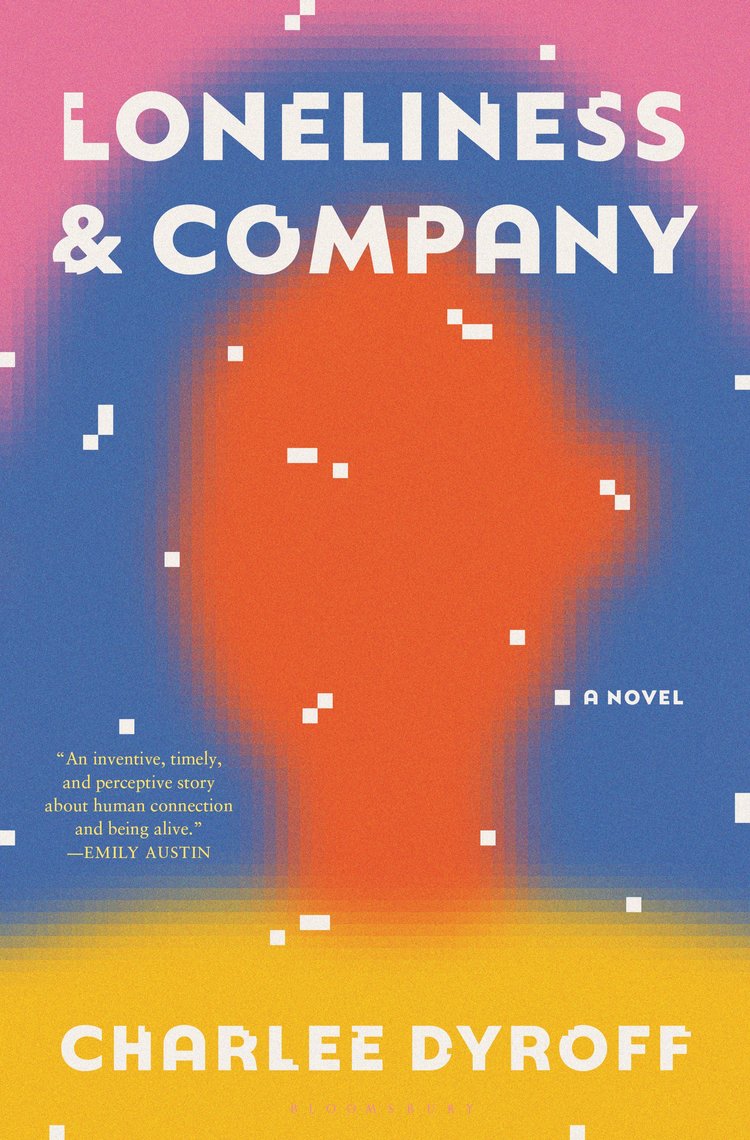 Lee graduated from the top of her class at the Program and expected a placement at a top company. Instead she’s sent to collect data for a company nobody’s ever heard of that’s trying to teach an AI to act as “a true friend.” Lee begins voyeuristically: gathering information online and observing her outgoing roommate Veronika. But then the team learns that their company is secretly trying to cure loneliness, an emotion erased from society decades ago but somehow returned and spreading rapidly; the “true friend” AI is one of the few tech ventures that hasn’t yet failed. The company becomes desperate. Lee’s pressured into not just inputting data she finds online, but giving the AI the data of her own real-world experiences. She’s pushed into a zany mindset of chasing experiences to feed the AI.