
Teddy Wayne’s latest novel, Taxi Driver as told by Noah Baumbach, is scalding, uneasily comic, and full of pathos.
THE GREAT MAN THEORY
by Teddy Wayne
Bloomsbury, August 2022
(via Sterling Lord Literistic)
 THE GREAT MAN THEORY tells the story of a downwardly mobile, divorced, fortysomething dad named Paul. He is a writer and English lecturer who lives in the wealthy enclave of Park Slope, Brooklyn, and he doesn’t like what’s happening to the bubble in which he lives nor what’s happening politically in the outside world. He is under contract to write a manifesto for a small publishing house, essays whose resentment for the political priorities of the modern world are filled with his fury and stubbornly unheralded talent.
But then Paul’s tenuous grasp on a good life slips further, and the reader begins descent along with Paul. As his fortunes disintegrate, and as he tallies up grievances in the face of one pointedly contemporary humiliation after another, his focus on a notorious right-wing TV propogandist intensifies. In this deviously popular commentator’s bogus proclamations he sees the malignant influence that forms the core of our warped cultural standards.
Seeing his own prospects fade then vanish, Paul is determined to make a final stand that will, in his addled projections, somehow redeem and enlarge his small life: he will dramatize and make indelibly public the private injustices he has withstood. And he wishes to do so on this popular TV propagandist’s show.
In his fifth and most stylistically mature and provocative novel, Teddy Wayne has written a tightly wound, variously scathing, relentlessly absorbing social story about a form of desperation and exasperation-fueled radicalization (from the Left). With flare and layers of thwarted empathy, Teddy offers up a decidedly modern anti-hero who deserves an immediate, dubious place in the canon of disappointing maleness.
Teddy Wayne is the author of Loner, The Love Song of Jonny Valentine, and Kapitoil. He is the winner of a Whiting Writers’ Award and an NEA Creative Writing Fellowship as well as a finalist for the Young Lions Fiction Award, the PEN/Bingham Prize, and the Dayton Literary Peace Prize. He is a regular contributor to the New Yorker, the New York Times, and McSweeney’s.
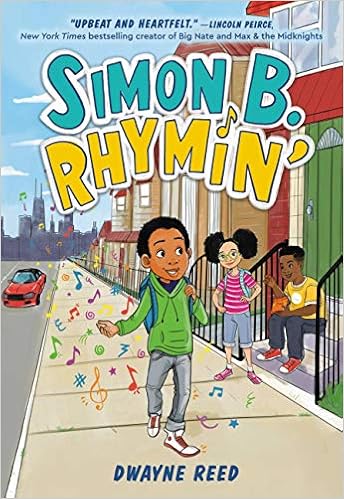 Le scénariste LaDarian Smith travaillera avec les studios 3000 Pictures à l’adaptation du livre middle-grade pour le grand écran, en partenariat avec la société de production Homegrown Pictures. La date de sortie du film n’est pas encore connue. (Lire l’
 That’s what Jess was to me. I was the ground; she was the rain. I wasn’t anything until she woke me up.
 THE SIGN FOR HOME tells the story of Arlo Dilly, a DeafBlind 23-year-old man raised by conservative family members who limit his use of technology. While taking a basic English composition class, Arlo is assigned a new sign language interpreter named Cyril Brewster who is recovering from a romantic breakup and is looking for a new challenge in his career. When Cyril begins to interpret Arlo’s classes he soon realizes that Arlo’s understanding of language, love, and life have been limited, governed, and often censored by iron-fisted guardians. Showing Arlo more of the world and the independence he could have puts Cyril in conflict with Arlo’s family. Against this external conflict of language mediation, we travel inside Arlo’s mind and inside his perceptions of the most important moments of his life, including his own linguistic awakenings, and a heartbreaking memory of first love and first friendship derailed by unspeakable tragedy. When the buried memories are eventually unlocked by a class writing assignment, Arlo convinces Cyril to abandon his own professional ethics to facilitate a forbidden meeting with his old school friends and first love. The narration of The Sign For Home alternates between Arlo’s voice (with its distinctive Deaf syntax) and Cyril’s fast and funny point of view, with dialogue rendered in both standard English and an approximation of American Sign Language structure. The resulting novel is not only unique, but fast-paced, delectable, emotional, and powerful.