
Paula Ben-Gurion wanted to marry a man, but what she got was a state: a novel about an unusual and courageous woman.
PAULA ODER DIE SIEBEN FARBEN DER EINSAMKEIT
(Paula, or: The Seven Shades of Loneliness)
by Stephan Abarbanell
Blessing, March 2024
 Paula grew up in Minsk, was sent to New York when she was young, dreamt of studying medicine and was a committed anarchist. But then she met her future husband, the founder of the state of Israel, David Ben-Gurion – and at the end of her life, she finds herself in a kibbutz in the Negev Desert. Her husband is expecting the arrival of his friend, Konrad Adenauer, who has just resigned as German Chancellor. Once again, it is down to Paula to organise the visit and arrange everything. Poverty, war, motherhood, and – again and again – loneliness: this novel is a memorial to a strong, courageous woman, who had to make many compromises in life, and became the First Lady of a country in which she did not believe. And who, even in old age, never stops doubting, searching and hoping.
Stephan Abarbanell was born in Brunswick in 1957 and grew up in Hamburg. He studied theology and general rhetoric in Hamburg, Tübingen and Berkeley. Abarbanell is now in charge of cultural affairs at rbb Broadcasting.
 Muse, secretary, wife: these are some of the labels used to describe the women whose influence on history has been erased. Their achievements have brought honour and fame to the men close to them – such as Karl Marx, Bertolt Brecht and Albert Einstein, who couldn’t have done what they did without their female friends, daughters or lovers – but they themselves remain largely unknown. The list includes scientists like Rosalind Franklin and Lise Meitner, who, unlike their male colleagues, were never celebrated for their discoveries; and authors and artists like Marie Hirsch, Lou Andreas-Salomé and Hedwig Thun, who hid behind male pseudonyms all their lives in order to be taken seriously. In « Stolen Fame », Schöler tells their stories, introducing us to the women who changed human history and showing that there are still issues around participation and visibility. Behind every successful man is a system that empowers him – and that system stands in every woman’s way.
 In a speculative future, Abel, a menial worker, is called to serve in a secretive and fabled jury system. At the heart of this system is the repeat room, where a single juror, selected from hundreds of candidates, is able to inhabit the defendant’s lived experience, to see as if through their eyes.
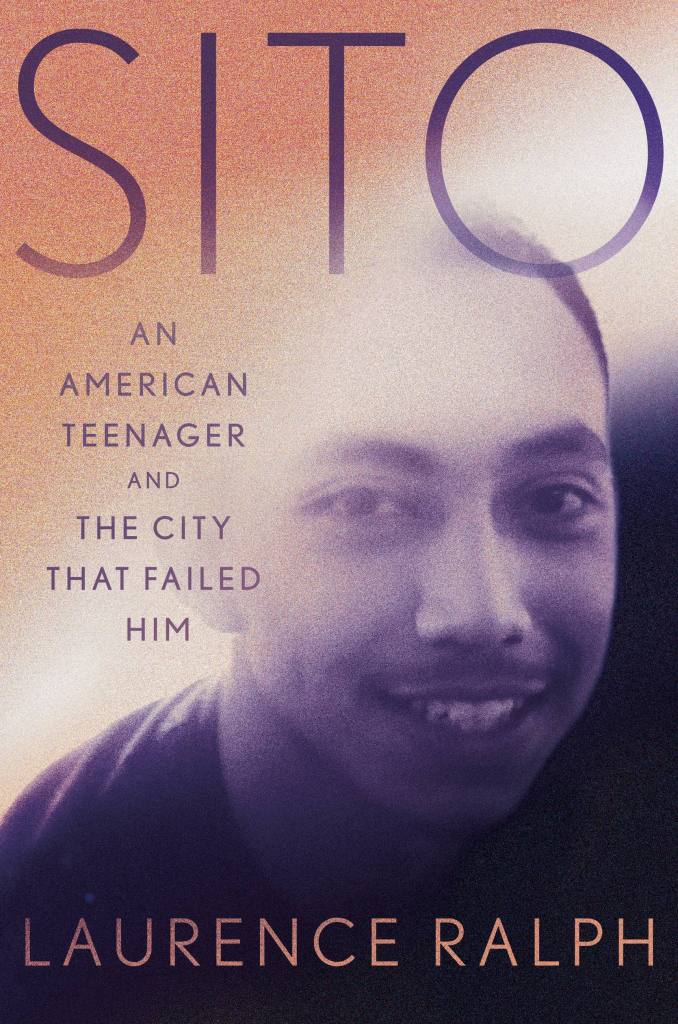 In September of 2019, Luis Alberto Quiñonez—known as Sito— was shot to death as he sat in his car in the Mission District of San Francisco. He was nineteen. His killer, Julius Williams, was seventeen. It was the second time the teens had encountered one another. The first, five years before, also ended in tragedy, when Julius watched as his brother was stabbed to death by an acquaintance of Sito’s. The two murders merited a few local news stories, and then the rest of the world moved on. But for the families of the slain teenagers, it was impossible to move on. And for Laurence Ralph, the stepfather of Sito’s half-brother who had dedicated much of his academic career to studying gang-affiliated youth, Sito’s murder forced him to revisit a subject of scholarly inquiry in a deeply personal way. Written from Ralph’s perspective as both a person enmeshed in Sito’s family and expert on the entanglement of class and violence, SITO is an intimate story with an message about the lived experience of urban danger, and about anger, fear, grief, vengeance, and ultimately grace.