There never was a gator killing around here, contrary to everlasting rumor, and there was only one real murder, but it seems each bad thing that happens is like an incantation invoking the Binderup family, its women and their dying.
GIRLS WITH LONG SHADOWS
by Tennessee Hill
Harper, TBD
(via Park & Fine Literary and Media)

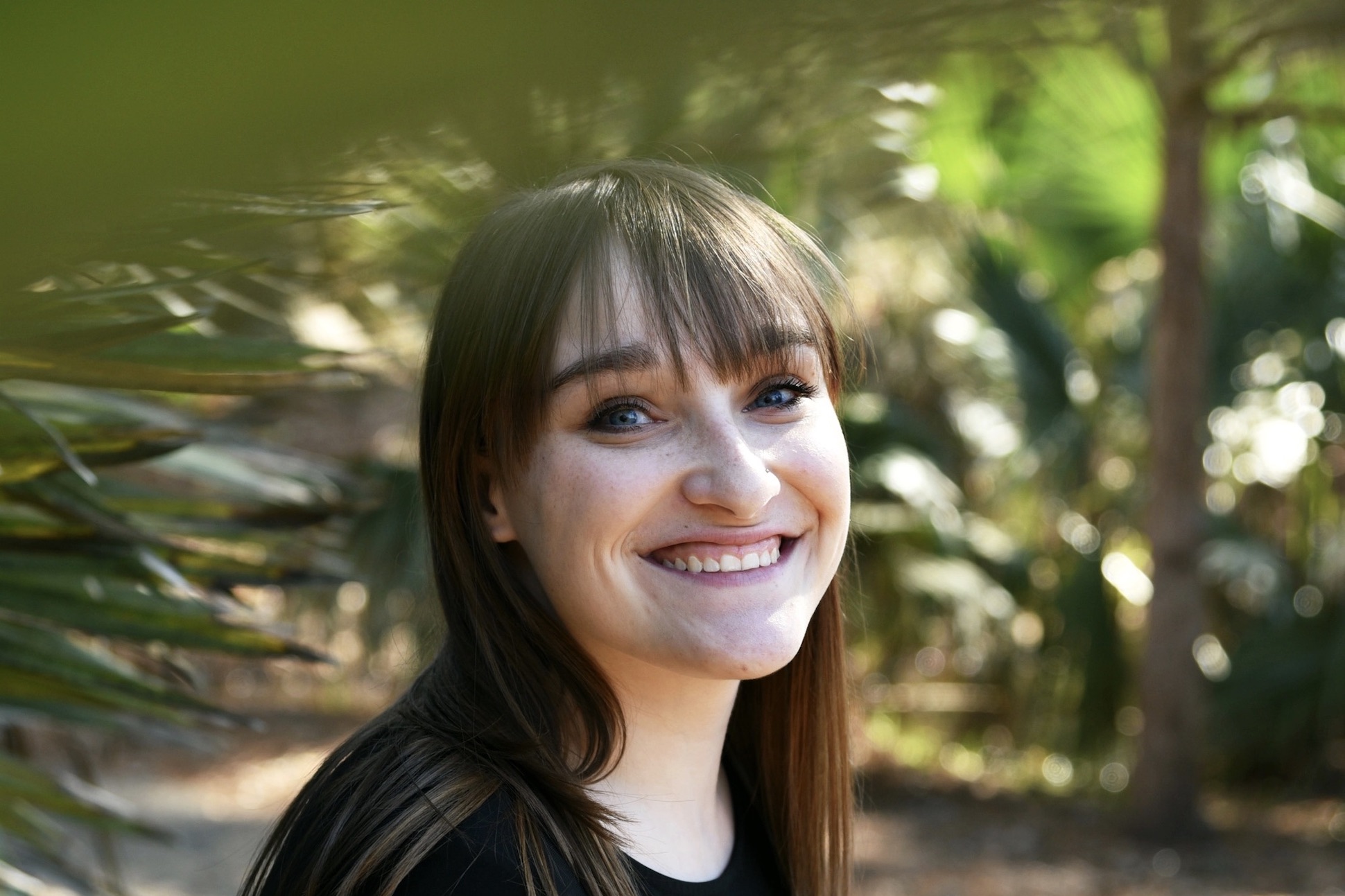
Photo by Emily Townsend
Identical triplets Baby A, Baby B, and Baby C Binderup came into the world as their mother left it, leaving them nameless and in the care of their Gram Isadora, whose maternal instincts died alongside her daughter. 19 years later, the triplets work at their Gram’s crumbling golf course, where the watchful eyes of the town observe them perched on lawnmowers, serving up glasses of lemonade to golfers and swimming in the murky waters of the river nearby, hoping to attract the kind of attention they are only beginning to understand.
Through the eyes of cautious Baby B, we watch as lustful Baby A and introverted Baby C find matches among the town boys. When even Baby B notices that the town’s golden boy seems to be intrigued by her, only her, it begins to appear that the young women’s wish to be seen as individuals has been granted – until a seemingly trivial kiss is gifted to the wrong sister. What comes next forces the sisters to confront the devastating implications of their collective anonymity. As insecurities become weapons and the tight bonds between sisters are severed, the threat of female teenage angst turns real and deadly, and the young women face a future where triplets must learn to be twins.
Tennessee Hill is a poet by trade; she was the 2022 Gregory Djanikian scholar and holds an MFA from North Carolina State University. Her work has been featured in POETRY, Best New Poets, Southern Humanities Review, Fugue, Arkansas International, and elsewhere. She is a South Texas native, where she still lives and teaches with her husband and their dog, Bark Ruffalo.

For the past five years, Ryan Richardson has relived that terrible night. The car door ripping open. The crushing blow to the head. The hands yanking him from the vehicle. His girlfriend Ali’s piercing scream as she is taken. With no trace of Ali or the car, a cloud of suspicion hangs over Ryan. But with no proof and a good lawyer, he’s never charged, though that doesn’t matter to the podcasters and internet trolls. Now, Ryan has changed his last name, and entered law school. He’s put his past behind him. Until, on a summer trip abroad to Italy with his law-school classmates, Ryan gets a call from his father: Ali’s car has finally been found, submerged in a lake in his hometown. Inside are two dead men and a cryptic note with five words written on the envelope in Ali’s handwriting: If something happens to me… Then, halfway around the world, the unthinkable happens: Ryan sees the man who has haunted his dreams since that night. As Ryan races from the rolling hills of Tuscany, to a rural village in the UK, to the glittering streets of Paris in search of the truth, he has no idea that his salvation may lie with a young sheriff’s deputy in Kansas working her first case, and a mobster in Philadelphia who’s experienced tragedy of his own.
Charles Bliss, raised by a single mother in a hardscrabble Maine fishing town, is a highly respected and much appreciated English teacher at Carrington Academy, an elite Connecticut prep school, from which he graduated some years ago as a scholarship student. Recently, Charles’s highly touted debut novel debut unexpectedly bombed, so he is grateful for his job at Carrington, while working feverishly on a new manuscript by night to capture the literary glory that was almost his.
When Detective Adam McAnnis first shows up at club West Heart in upstate New York, his motivations for being there are unclear. But when a dead body is found shortly after his arrival, everyone at the club is suspect. The complication? The folk of West Heart have their own language—the language of high society—and Detective McAnnis is an outsider. In order to solve the murder, McAnnis must not only sleuth for clues but infiltrate a tight-knit community that has no intention of ratting out one of their own.
For sisters Lovely and Beauty, home is a prison under the toxic watch of their controlling, abusive mother, Farida Khanam. The girls are each locked in their own rooms, their own gilded cages, and have never been allowed to leave the house by themselves. GOOD GIRLS opens and it’s Lovely’s 40th birthday, the day Farida will give Lovely the freedom to go to the Gausia Market alone. “Today was the day for everyone to be what they weren’t, or perhaps be what they were.” With a tragic foreboding, we know today is the day that will change everything.