
A tightly wound, consuming tale for readers of Claire Keegan and Ian McEwan, about a 1950s American housewife who decides to get into the pool in her family’s apartment complex one morning and won’t come out.
THE MOST
by Jessica Anthony
Little, Brown & Co, July 2024
(via Sterling Lord Literistic)
 It is an unseasonably warm Sunday in November 1957. Katheen, a college tennis champion turned Delaware housewife, decides not to join her flagrantly handsome life insurance salesman husband, Virgil, or their two young boys, at church. Instead, she takes a dip in the kidney-shaped swimming pool of their apartment complex. And then she won’t come out.
A consuming, single-sitting read set over the course of eight hours, The Most breaches the shimmering surface of a seemingly idyllic mid-century marriage, immersing us in the unspoken truth beneath. As Sputnik 2 orbits the earth carrying Laika, the doomed Soviet dog, Kathleen and Virgil hurtle towards each other until they arrive at a reckoning that will either shatter their marriage, or transform it, at last, into something real.
Jessica Anthony has been a butcher in Alaska, an unlicensed masseuse in Poland, and a secretary in San Francisco. In 2017, while writing Enter the Aardvark, Anthony was working as Bridge Guard, guarding the Maria Valeria Bridge between Sturovo, Slovakia and Esztergom, Hungary. Normally, she lives in Maine and teaches at Bates College.
 Muse, secretary, wife: these are some of the labels used to describe the women whose influence on history has been erased. Their achievements have brought honour and fame to the men close to them – such as Karl Marx, Bertolt Brecht and Albert Einstein, who couldn’t have done what they did without their female friends, daughters or lovers – but they themselves remain largely unknown. The list includes scientists like Rosalind Franklin and Lise Meitner, who, unlike their male colleagues, were never celebrated for their discoveries; and authors and artists like Marie Hirsch, Lou Andreas-Salomé and Hedwig Thun, who hid behind male pseudonyms all their lives in order to be taken seriously. In « Stolen Fame », Schöler tells their stories, introducing us to the women who changed human history and showing that there are still issues around participation and visibility. Behind every successful man is a system that empowers him – and that system stands in every woman’s way.
 We live in a world of mixed messages for women: You can be anything you want to be, but don’t expect to be paid equally for it; It’s what is inside that counts, but be sure to wax, bleach, and slim down what’s outside first; You deserve respect and equality, but our laws won’t always protect your rights. Most parents find it easier to tell girls how strong, equal, and powerful they are than to talk about how the world can be particularly difficult or scary for them. But when we don’t address the challenging or disturbing experiences most girls endure, we contribute to the problem.
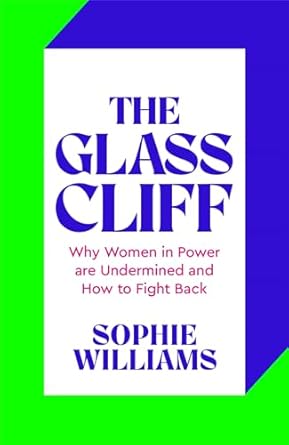 Have you ever wondered why there are so few success stories of women in business leadership? Or maybe you’ve wondered what life is really like on the other side of The Glass Ceiling? The world of work is supposedly changing, embracing diversity – yet are the opportunities we’re giving to women really equal to those of men?
 Abigail blends reporting, research, and history to create an international portrait of new motherhood and the policies that scaffold this transitional phase of life. As debates surrounding paid leave, universal daycare, and national healthcare rage on across different corners of the globe, FOUR MOTHERS is an intimate narrative of what those policies mean in the everyday lives of four women—and a compelling argument for the necessity and urgency of supporting parents.