
Were the signs that Putin is a ruthless dictator there all along? How should we deal with President Xi of China? THE DICTATORS will contain 64 essays detailing the lives of some of the world’s infamous dictators, going back to 600BC up to the current day.
THE DICTATORS:
A Warning from History
by Iain Dale
Hodder & Stoughton, April 2024
(via Northbank Talent Management)
 THE DICTATORS will feature essays on 60 of the most significant and notorious dictators from the 4th century BC to the present day. Unlike the subjects of the previous three books in this series, which were self-selecting, the decision about who to include will be subjective. It will be Iain’s personal choice, and he will include a mixture of ‘usual suspects’ and less familiar figures. The essays will be written by a range of academics, historians, commentators, political journalists and serving politicians. Each contributor will be carefully chosen. Most have either written about their subjects before or have a personal connection of some sort.
THE DICTATORS will be selected according to a defined set of criteria, and will include elected and unelected dictators, wartime and peacetime dictators, those driven by ideology and those with a reputation for sheer brutality. How did these tyrants, autocrats and despots seize power and how did they exercise it? Are there specific character traits that all dictators share? What can we learn from them in order to spot the warning signs in future?
By studying a wide variety of dictators in different parts of the world and throughout history, themes and patterns will inevitably emerge. The book is acutely relevant to world politics today.
As the subtitle states, it will serve as a warning from history.
Iain Dale is an accomplished broadcaster, presenting his own daily radio show on LBC, and several podcasts including the Iain Dale Book Club and The Presidents and Prime Ministers to accompany the Hodder books. He is a regular on CNN, Question Time, Newsnight, Good Morning Britain, the Jeremy Vine Show on Channel 5, The Andrew Marr Show, Politics Live and a myriad of other political programmes too. He is a regular columnist for the Telegraph, Evening Standard and the ‘i’ newspaper and has a weekly column in the Eastern Daily Press and East Anglian Daily Times.
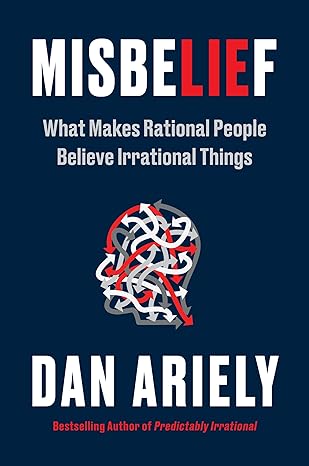 Misinformation affects all of us on a daily basis—from social media to larger political challenges, from casual conversations in supermarkets, to even our closest relationships. While we recognize the dangers that misinformation poses, the problem is complex—far beyond what policing social media alone can achieve—and too often our limited solutions are shaped by partisan politics and individual interpretations of truth.
 For more than two decades, award-winning science and nature writer David Quammen has traveled to Earth’s most far-flung and fragile destinations, sending back field notes from places caught in the tension between humans and the wild. This illuminating book features 20 of those assignments: elegantly written narratives, originally published in
  A companion to the bestselling book