
A meditation on work and parenting that focuses on the stage when your children are preparing to leave the nest. American broadcaster and journalist Mary Louise Kelly reckons with the compromises she has made – as most people have – while managing a busy life and career, and what it feels like now that the time she has left with her children at home is starting to run out.
IN THE TIME WE HAVE LEFT:
Thoughts on a Finish Line of Motherhood
by Mary Louise Kelly
Holt, late 2022
(via Levine Greenberg Rostan)
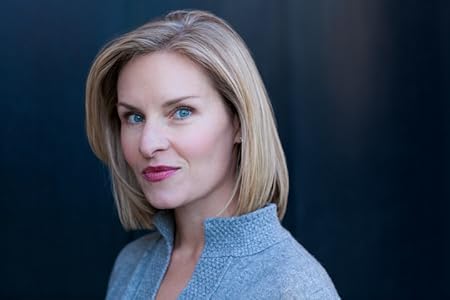 Can she get to her son James’s soccer game on Thursday? Nope. Mary Louise Kelly, co-host of NPR’s All Things Considered, has to be at the studio all afternoon, reporting the news. Drive carpool for Alexander next week? Not if she wants to be part of the press corps flying to Iraq with the Secretary of Defense. She has never been cavalier about these decisions. The bargain she has always made with herself is this: this time I’ll get on the plane, but next year, I’ll be there for the mom stuff.
Well, James and Alexander are now 17 and 15, and a new realization has overtaken her: in only one year, her older son will be leaving for college. The time for do-overs is over. There used to be years to make good on her promises; now, there are months, weeks, minutes.
Mary Louise Kelly is coming to grips with the reality every parent faces. Unlike your marriage or your job, childhood has a definite expiration date. You have only so many years with your kids before they leave your house to build their own lives. It’s what every parent is supposed to want, what they raise their children to do. But the effect of this on her and her husband will be immense. It is at best bittersweet, at worst, devastating. And it brings with it the enormous questions of what she did right and what she did wrong.
Mary Louise has become consumed by these thoughts. What’s she’s written is not a definitive answer – not for herself and certainly not for any other parent. But her questions, her issues, will resonate with every parent. And, yes, especially with mothers, who are judged more harshly by society and, more importantly judge themselves more harshly. What would she do if she had to decide all over again?
This is no political tract, there is no correct answer. But her thoughts as she faces the coming year will speak to anyone who has ever cared about a child. IN THE TIME WE HAVE LEFT is not a manifesto; it’s an examination that is moving, often funny, revelatory and immensely relatable.
Mary Louise Kelly has been reporting for NPR for nearly two decades and is now co-host of All Things Considered. She has also written two suspense novels, Anonymous Sources and The Bullet, and is the author of articles and essays that have appeared in The New York Times, The Atlantic, The Washington Post, and The Wall Street Journal among numerous other publications.
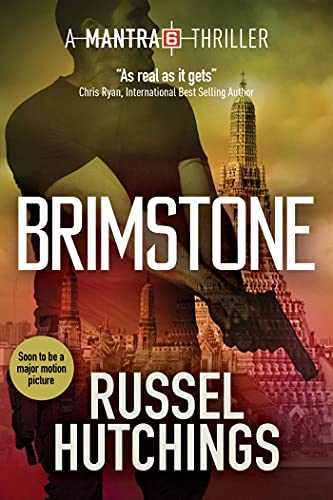 John Devereaux, an SAS Warrant Officer, is seconded to the Australian Secret Intelligence Service and handed a mission that will test him to his very core – both professionally and personally. The operationally deniable mission: infiltrate into Cambodia via parachute in the dead of night and assassinate two high-value targets, alone, and with two dozen enemy soldiers in his way. From the relentless jungles of Cambodia to the chaotic civilian-filled streets of Sydney and Bangkok, to the secretive dens of Moscow and the extravagant French Riviera, explosive SAS and ASIS action uncovers a shadowy and powerful organisation that brings us face to face with the Russian Mafia, and an assassin getting intimate. Unbeknown to Devereaux, the Director-General of the Secret Intelligence Service, Magnus Webb, is testing him for a far more important role – to head an off-the-books clandestine cell buried deep inside this secret organisation and known only as MANTRA-6. Devereaux’s mission has only just begun …
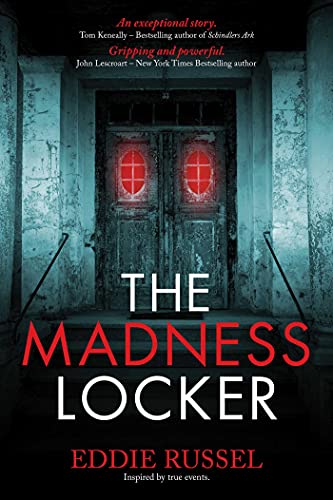 In the early hours of Christmas morning in 1986, the body of an older woman was discovered inside a wheelie bin in the eastern suburbs of Sydney, Australia. There were no clues and no suspects. After an extensive investigation, the police admitted defeat and filed it as a cold case. It is a case that taunts them still. Eddie Russell’s debut conjures a plausible motive to this strange crime in this artfully wrought, page-turning story which takes the reader from Utrecht to Berlin, to Auschwitz, and finally, to a sleepy neighbourhood in Sydney, Australia.
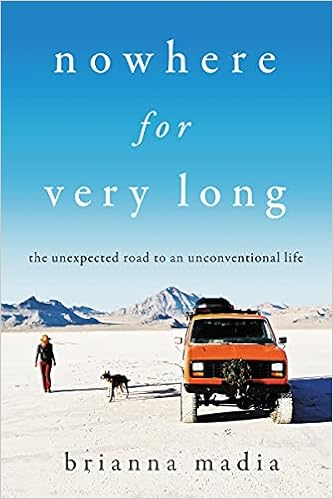 A woman defined by motion, Brianna Madia bought a beat-up bright orange van, filled it with her two dogs Bucket and Dagwood, and headed into the canyons of Utah with her husband. Nowhere for Very Long is her story of exploration—of the world outside and the spirit within.
 Four years after her dad died, Sasha Johnson-Sun’s life is entirely different for her and her Korean immigrant mother: a smaller apartment, Saturdays spent cleaning classmates’ houses, her father’s photo on the bookshelf with other deceased relatives. Only Sasha’s top-of-class grades are the same, because if Sasha knows one thing, it’s this: she will graduate as the school’s valedictorian. After all, this is the dream her father had for her, and that her mother’s many sacrifices have made possible.