
Rethinking climate change and democracy.
DEMOKRATIE IM FEUER
(Democracy in Flames)
by Jonas Schaible
DVA/PRH Germany, March 2023
 Many people think that protecting our climate and democracy are mutually exclusive. For some, the fight against climate change is moving too slowly, while others are already feeling threatened by the prospect of an « eco-dictatorship ». In DEMOKRATIE IM FEUER, journalist Schaible shows that protecting the climate and democracy are actually prerequisites for each other. Without one, the other will become impossible. He exposes false contradictions, and argues that what we need is « climate democracy » – for the climate crisis is already starting to limit our freedoms, and we’ll only be able to save the planet by democratic means. DEMOKRATIE IM FEUER takes a new look at the relationship between democracy and climate change, and sketches an optimistic vision of a future where the two reinforce each other.
Jonas Schaible, born in 1989, is an editor at Spiegel’s Berlin office. He studied politics and media studies in Tübingen and Berlin, and graduated with a degree in journalism from Hamburg’s Henri Nannen School. He has been writing regularly about climate change and climate policy since 2018, and won the German Reporter Prize for Best Essay for his feature « Wer von Ökodiktatur spricht, hat das Problem nicht verstanden » (‘If you’re talking about eco-dictatorships you haven’t understood the problem’).
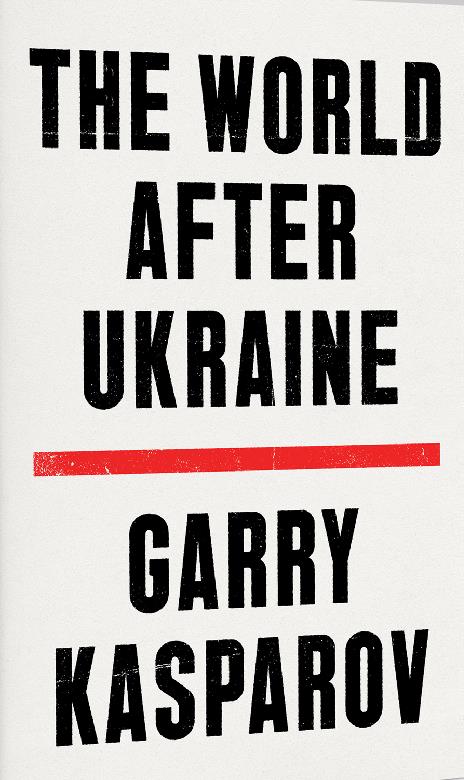
 After his sudden rise to power in the summer of 2019 amid the Brexit deadlock, Boris Johnson presided over the most dramatic period of British history in almost a century. From the controversial prorogation of Parliament in August 2019 to the Conservative party’s historic landslide victory later that year, the agonising upheaval of Brexit and the Covid-19 pandemic, the Afghanistan crisis, the conflict in Ukraine, and the series of devastating scandals that were ultimately Johnson’s undoing, his premiership has been more explosive than any other in living memory.
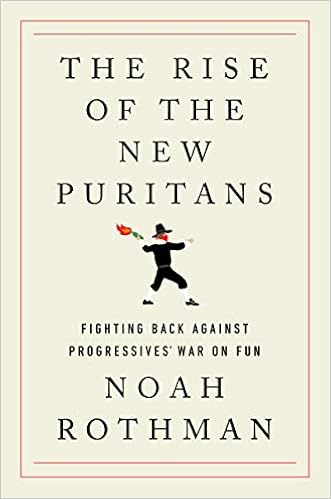 In Noah Rothman’s view, the Left used to be the party of the hippies and the free spirits. Now it’s home to woke scolds and humorless idealogues. The New Puritans can judge a person’s moral character by their clothes, Netflix queue, fast food favorites, the sports they watch, and the company they keep. No choice is neutral, no sphere is private.
 Cancel culture. Chances are you’ve heard about this a lot lately, but what really is it? Blacklisting celebrities? Censorship? Up until this point, this has been the general consensus in the media. But it’s time to raise the bar on our definition—to think of cancel culture less as scandal or suppression and more as an essential means of democratic expression and accountability. THE CASE FOR CANCEL CULTURE offers a fresh progressive lens in favor of cancel culture as a tool for activism and change. It will help readers reflect on and learn the long history of canceling (the Boston Tea Party was cancel culture); how the left and right uniquely equip it as part of their political toolkits; how intersections of society wield it for justice; and ultimately how it levels the playing field for the everyday person’s voice to matter. Why should we care? Because in a world where protest and free speech are being challenged by the most powerful institutions, those without power deserve to understand the nuance and importance of this democratic tool available to them. Rather than seeing cancel culture as a nasty byproduct of the digital age, it should be seen as a powerful instrument for change. Ernest Owens shows readers exactly how with examples from politics, pop culture, and his own personal experience. Readers will walk away from this first-of-its-kind exploration not despising cancel culture but embracing it as a form of democratic expression that’s always been leading the charge in liberating us all.