
A literary love story of Millennial discontent that explores how far two people can go inventing their own parallel reality—with raccoons.
QUALITY TIME
by Suzannah Showler
McClelland & Stewart/PRH Canada, May 2023
(via Sterling Lord Literistic)

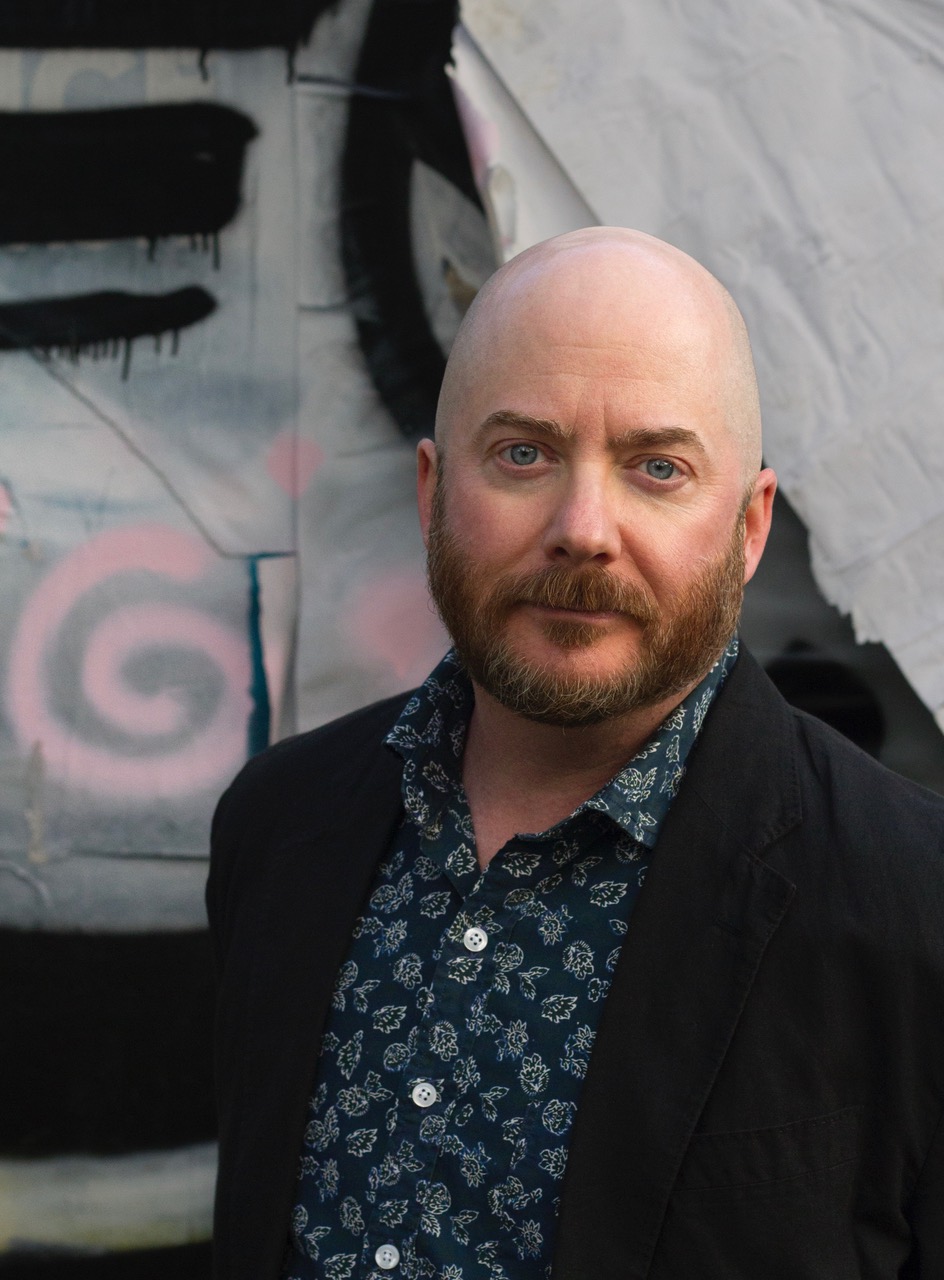
Credit: © Andrew Battershill
Ferociously in love and in their own universe, Lydie and Nico’s first year together was so beautiful that they’ve been recreating it, day by day, ever since. The anniversaries, sometimes elaborate, sometimes small, become the couples’ own internal logic, tethering them to a reality they’ve built together.
But the real world is starting to creep in. As the people around them start to get married, get pregnant, get serious, Lydie wonders what it is they’re really doing—and why it leaves her so little time to focus on what she moved to the city for: creating art. Meanwhile, Nico experiences a divine event that convinces him the anniversaries matter more than ever, and in the city around them, the urban wildlife is rising up on a mission of their own.
A vivid time capsule of recession-era Toronto, Quality Time is a universal story of self-discovery and invention, capturing that rare, innocent time when we feel like masters of our own fate, and what happens when the real world starts to press in from the edges.
Suzannah Showler is the author of Most Dramatic Ever, a book of cultural criticism about The Bachelor (ECW 2018), and the poetry collections Thing is (McClelland & Stewart 2017) and Failure to Thrive (ECW 2014). You can read her work in the New York Times Magazine, Slate, the Walrus, Hazlitt, and the Los Angeles Review of Books, among other places. She is the poetry editor for Maisonneuve. She also does contingent labour teaching creative writing. She currently lives on the traditional, ancestral, and unceded land of the Sḵwx̱wú7mesh (Squamish), Səl̓ílwətaʔ/Selilwitulh (Tsleil-Waututh) and xʷməθkʷəy̓əm (Musqueam) Nations with her partner, Andrew Battershill.
 Javier Perez is a hustler from a family of hustlers. He learns from an early age how to play the game to his own advantage, how his background—murdered drug-dealer dad, single cash-strapped mom, best friend serving time for gang activity—becomes a key to doors he didn’t even know existed. This kind of story, molded in the right way, is just what college admissions committees are looking for, and a full academic scholarship to a prestigious university brings Javi one step closer to his dream of becoming a famous writer. As a college student, Javi embellishes his life story until there’s not even a kernel of truth left. The only real connection to his past is the occasional letter he trades with his childhood best friend, Gio, who doesn’t seem to care about Javi’s newfound awareness of white privilege or the school-to-prison pipeline. Soon after graduating, a viral essay transforms Javi from a writer on the rise to a journalist at a legendary magazine where the editors applaud his “unique perspective.” But Gio more than anyone knows who Javi really is, and sees through his game. Once he’s released from prison and Javi offers to cut him in on the deal, will he play along with Javi’s charade, or will it all come crumbling down? A sendup of virtue signaling and tear-jerking trauma plots, Victim asks what real diversity looks like and how far one man is willing to go to make his story hit the right notes.
 Kate Riley wrote MIRIAM about eight years ago as a series of micro-dispatches (on an iPod Touch) to her heroically patient, encouraging friend, Molly Young (also
  Bolivian-Argentinian Inez Olivera belongs to the glittering upper society of nineteenth century Buenos Aires, and like the rest of the world, the town is steeped in old world magic that’s been largely left behind or forgotten. Inez has everything a girl might want, except for the one thing she yearns the most: her globetrotting parents―who frequently leave her behind.
 In the summer of 1984, teenage Mel becomes entranced with the trans woman who appears in her blue-collar American town. Through the world-expanding time she spends with the woman, Sylvia, and the changes of adolescence, Mel soon discovers she is not the girl she thought she was—in fact, she might not be a girl at all. In the wake of this revelation, Mel navigates gender, sexuality, and an intense friendship with her childhood best friend in a hostile time and place for both girls and queers.