
Less smartphone – more life!
DIGITALE BALANCE
(Digital Balance)
by Christoph Koch
Heyne/PRH Germany, March 2021
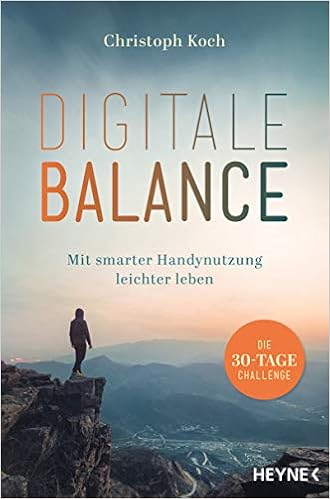 The smartphone. How could a small device have become so life-defining so quickly? Can we change this situation without having to do without too many things? Christoph Koch says, yes, we can. For many years he has been dealing with the topics of internet abstinence and online addiction. With scientifically supported findings, he explains what is behind all this. Why are apps so addicting? What is happening in the brain? Why is almost no one resistant to it? Which business models are based on this? And what do experts say? Koch’s 30-day challenge shows why it is worth reducing online consumption and how one can benefit both physically and mentally through a more aware interaction with digital media. Motivating, entertaining, easy to implement – a guide for creating a digital balance.
Christoph Koch, born in 1974, is a journalist for many respected news-papers and periodicals. Some years ago his book I Am Offline: Life without a Smartphone was many weeks on the Spiegel bestseller list. Since then he has given countless lectures on the topic of internet abstinence and online addiction, and holds interviews in radio, print, and television. Considered a digitalisation expert, he speaks at conferences and is welcome guest in podium discussions. He has received various awards for his journalistic work.
 The nose sits in the middle of the face, yet most people know surprisingly little about it. Yet our ENT department manages a large part of our perception – apart from breathing. Next to the eyes, the nose, ears and throat form our most important connection to the outside world. Dr. Christine Löber explains in best pop science manner how smelling works, where the voice comes from and why cotton swabs have no place in the ear. She makes us impressively aware of the influence the ENT area has on our psyche. And she gives tips on how to keep the throat, nose and ears healthy. The great knowledge book about the throat, nose and ears.
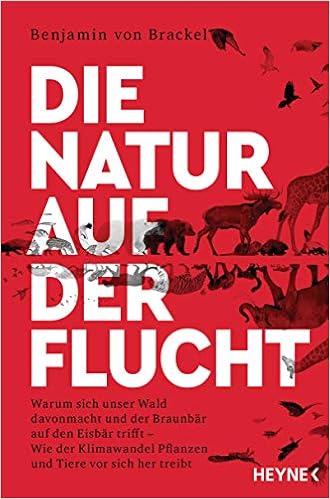 There is something afoot in the world of animals and plants, something which has so far caught too little attention. Wherever they can, animals and plants are moving towards the earth’s poles to flee from rising temperatures and drought in their natural habitats. Tropical zones lose their inhabitants, beavers are settling in Alaska, gigantic shoals of fish disappear just to reappear in front of foreign coastlines. Sea creatures move an average of 72 kilometres a year, land creatures an average of 17 kilometres. In this exciting and vivid book, Benjamin von Brackel describes a phenomenon which demonstrates nature’s impressive adaptability as well as the dramatic consequences of climate change – not the least for humankind, for the migration of species won’t leave us unaffected.
  Winter in Innsbruck. A homeless man seeks refuge in a long abandoned house in the woods. In the bedroom, he finds a dead body. It has been lying there for twenty years. It’s just what the press photographer David Bronski has been waiting for. He and his colleague, the journalist Svenja Spielmann, are tasked with reporting from the scene – but what he won’t tell anyone is what connects him to this spectacular case.
 Ellen has always felt like a visitor in her own life. Except once, when she was young and briefly lived on the Halligen islands with her mother. She never wanted to leave, but had no say in the matter. Now she returns to these oddly familiar marshes – and to Liske, who once was like a sister to her. As they grow closer, old conflicts are stirred up again; but Ellen refuses to give up. Because she knows that this is her true home. For readers of Delia Owens’