
Criminal profiling pioneer Dr. Ann Wolbert Burgess charts her journey from groundbreaking researcher of sexual violence to one of the first women on the elite FBI team, conducting forensic interviews of high profile serial killers, testifying at trials, and revolutionizing police and prosecutorial procedures in the process, offering readers a look into the inner workings of the FBI.
A KILLER BY DESIGN:
How the FBI’s Behavioral Science Unit Learned To Hunt Serial Killers and Understand Criminal Minds
by Ann Wolbert Burgess & Steven Constantine
Hachette US, 2022
“In the early 1970’s, sexual assault wasn’t talked about. It was viewed as indecent or attributed to the fringes of society, dismissed as a women’s issue — as if men weren’t even involved. But this perception showed a stark disconnect from reality and facts. At the time, forcible rape was one of four major violent crimes in the United States. It was a large-scale problem that was further compounded by a lack of treatment options available for managing the emotional and traumatic effects that victims of rape struggled with most. Hospitals only treated a victim’s physical trauma, law enforcement hadn’t yet developed standards for processing their cases, and academics largely avoided the topic as too controversial for studies or research. But ignoring the problem wasn’t a solution. It was complicity. It added to the stigma and misperceptions that allowed rapists a sense of impunity and kept victims powerless to speak out. It made it worse.”
 This was the grim reality that Ann Burgess, then a doctoral graduate with a degree in psychiatric nursing, found when she decided to get involved in the study of rape and sexual assault, choosing a topic that few others saw as worth the trouble. But what she called the complete “absence of understanding” surrounding this urgent issue left her no choice. Fortunately, she connected with a medical sociologist, Lynda Lytle Holmstrom, with whom Ann created the first ever formalized study of rape from the victim’s perspective, and through countless interviews with rape survivors ultimately proved that rape is more about dominance and control than sex. The impact of this early work was groundbreaking. It led to the development of the first rape crisis centers, created new police standards, and resulted in an increase in rape trials with outcomes that favored the victim. It also captured the attention of the FBI Academy, leading Burgess to become one of the first female consultants hired by the agency.
The book will include fascinating true accounts of high-profile serial killers to offer readers an unprecedented look into the inner workings of the FBI, where she was a colleague of John Douglas of Mindhunter fame. And it will engage readers through a vivid narrative that combines authentic criminal profiling sessions, interviews with serial sexual killers, courtroom trials, and firsthand accounts of victims to show how the rape movement began, how far it’s come, where it stands today and how this work is one of the cornerstones of today’s #MeToo Movement.
Ann Wolbert Burgess, D.N.Sc., APRN, FAAN, is a widely recognized pioneer in the treatment of victims of rape, trauma and abuse. She has received numerous honors including The Living Legend Award from the American Academy of Nursing, the American Nurses’ Association Hildegard Peplau Award, and the Sigma Theta Tau International Audrey Hepburn Award. She is the namesake of the Ann Burgess Forensic Nursing Award, presented annually by The International Association of Forensic Nurses. She regularly appears as an expert witness to offer courtroom testimony for high-profile cases involving violent serial offenders, child abuse, and sexual crime. Her courtroom testimony has been described as “groundbreaking.” Ann is a professor at Boston College Connell School of Nursing where she teaches graduate courses in forensic nursing. Before that she held faculty appointments at the University of Pennsylvania and Boston University.
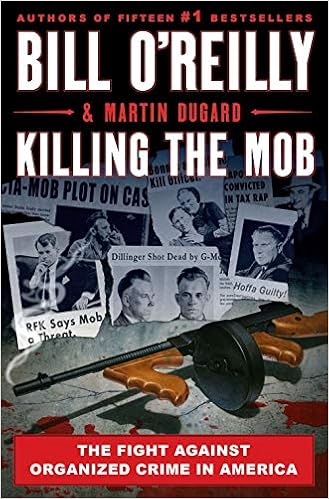 KILLING THE MOB is the tenth book in Bill O’Reilly’s #1
  Beginning in his own hometown of New Orleans, Clint Smith leads the reader through an unforgettable tour of monuments and landmarks—those that are honest about the past and those that are not—that offer an intergenerational story of how slavery has been central in shaping our nation’s collective history, and ourselves. It is the story of the Monticello Plantation in Virginia, the estate where Thomas Jefferson wrote letters espousing the urgent need for liberty while enslaving over 400 people on the premises. It is the story of the Whitney Plantation, one of the only former plantations devoted to preserving the experience of the enslaved people whose lives and work sustained it. It is the story of Angola, a former plantation-turned maximum security prison in Louisiana that is filled with Black men who work across the 18,000-acre land for virtually no pay. And it is the story of Blandford Cemetery, the final resting place of tens of thousands of Confederate soldiers. In a deeply researched and transporting exploration of the legacy of slavery and its imprint on centuries of American history, HOW THE WORD IS PASSED illustrates how some of our country’s most essential stories are hidden in plain view—whether in places we might drive by on our way to work, holidays such as Juneteenth, or entire neighborhoods—like downtown Manhattan—on which the brutal history of the trade in enslaved men, women and children has been deeply imprinted.
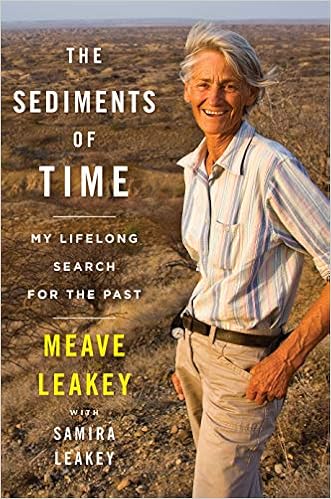 In THE SEDIMENTS OF TIME, preeminent paleoanthropologist Meave Leakey brings us along on her remarkable journey to reveal the diversity of our early pre-human ancestors and how past climate change drove their evolution. She offers a fresh account of our past, as recent breakthroughs have allowed new analysis of her team’s fossil findings and vastly expanded our understanding of our ancestors. Meave’s own personal story is replete with drama, from thrilling discoveries on the shores of Lake Turkana to run-ins with armed herders and every manner of wildlife, to raising her children and supporting her renowned paleoanthropologist husband Richard Leakey’s ambitions amidst social and political strife in Kenya. When Richard needs a kidney, Meave provides him with hers, and when he asks her to assume the reins of their field expeditions after he loses both legs in a plane crash, the result of likely sabotage, Meave steps in. THE SEDIMENTS OF TIME is the summation of a lifetime of Meave Leakey’s efforts; it is a compelling picture of our human origins and climate change, as well as a high-stakes story of ambition, struggle, and hope.
 Taking us from the slave era, when white women fought in court to keep “ownership” of their slaves, through the centuries of colonialism, when they offered a soft face for brutal tactics, to the modern workplace, White Tears/Brown Scars tells a charged story of white women’s active participation in campaigns of oppression. It offers a long overdue validation of the experiences of women of color. Discussing subjects as varied as The Hunger Games, Alexandria Ocasio-Cortez, the viral BBQ Becky video, and 19th century lynchings of Mexicans in the American Southwest, Ruby Hamad undertakes a new investigation of gender and race. She shows how the division between innocent white women and racialized, sexualized women of color was created, and why this division is crucial to confront. Along the way, there are revelatory responses to questions like: Why are white men not troubled by sexual assault on women? (See Christine Blasey Ford.) With rigor and precision, Hamad builds a powerful argument about the legacy of white superiority that we are socialized within, a reality that we must apprehend in order to fight.