
Music makes us happier, healthier, smarter and nicer – and we need more of it in our lives.
DIE MACHT DER MUSIK
(The Power of Music)
by Ullrich Fichtner
DVA/PRH Germany, November 2025
 Music has an extraordinary effect on us: it can give us goosebumps and butterflies, it can make our hearts beat faster, it can cheer us up and make us sad, can bring our stress levels down and ease pain. Not just that, but the latest findings from neuroscience and brain science show that it can have a positive impact on our health, psyche and social skills, and help develop and reinforce cognitive skills in both the young and the old.
In DIE MACHT DER MUSIK, the multi-award-winning Spiegel reporter and music aficionado demonstrates that music has huge tangible benefits. Using his wide-ranging experience with music and musicians in all genres around the world, as well as the latest scientific studies, he reveals how and why music is so important both for us individually and society at large, how it works, its enormous potential as a social tool, and how it can help us live a healthier, happier, more peaceful – in short: better – life.
Ullrich Fichtner was born in 1965 and is a Spiegel reporter based in Paris. With three Egon Erwin Kisch and three Henri Nannen prizes to his name, he is one of the most award-winning German journalists. His latest book, « Geboren für die großen Chancen » (‘A future of opportunities’) was shortlisted for the German Non-Fiction Prize.
 Today, Shazam is one of the most iconic and widely used apps in the world, with a brand name so recognizable that it has become a verb. But what few people know is that it was invented before smartphones existed. Chris dreamed up Shazam in 1999, when people were still buying CDs and carrying around portable CD players with wired headsets. There was no Bluetooth, Wi-Fi, and certainly no App Store. The closest thing to streaming music was the illegal sharing of digital files on platforms like Napster. There was no Facebook, Instagram, or even Myspace. Chris’s idea, that anyone, anywhere, could use their phone to identify a song playing in the background, sounded like science fiction. More than 100 experts told him it couldn’t be done, but Chris refused to give up. Instead, he assembled a dream team of brilliant minds—engineers, scientists, and business thinkers—who shared his vision (after some persuasion). United by a shared sense of purpose and determination, they set out to build the impossible from scratch. Together, they would develop the technology that would power the world’s first AI-driven consumer tool, years before anyone had even heard the word “app.” What followed was an eighteen-year odyssey marked by near-bankruptcy, groundbreaking innovation, sabotage, fierce competition with behemoths like Google and Sony, and bitter internal battles among team members. Through every setback and betrayal, Chris never gave up on his vision, and he continued to fight to keep Shazam on course. In the end, the idea that no one thought could work became a global phenomenon. This is more than a tech success story. It’s a deeply human, often emotional narrative about vision, grit, and the power of believing in the impossible.
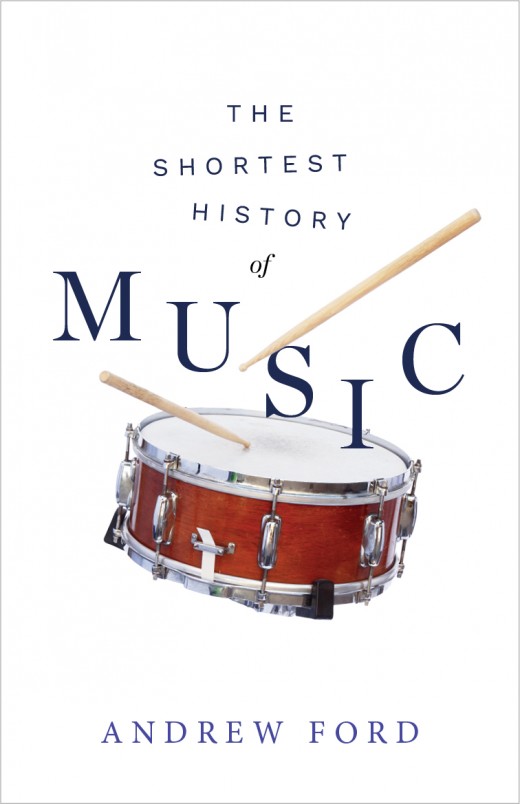 From award-winning broadcaster and composer Andrew Ford, The Shortest History of Music is a lively, authoritative tour through several thousand years of music. Packed with colourful characters and surprising details, it sets out to understand what exactly music is – and why humans are irresistibly drawn to making it.