
The story of a passionate love affair.
EINE LIEBE IN PARIS: ROMY & ALAIN
(A Love in Paris: Romy and Alain)
by Thilo Wydra
Heyne, October 2020
(chez Verlagsgruppe Random House – voir catalogue)
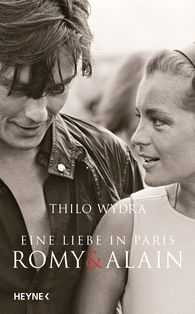 Actors Romy Schneider and Alain Delon were the dream couple of the 1960s. They fell in love when they first met in Paris in 1958 on the set of the Arthur Schnitzler adaptation Christine, and their extraordinary roller-coaster affair would last five years. Four years later, they are reunited in front of the camera, playing lovers in the cult film The Swimming Pool, and thus begins a friendship that would last until Romy Schneider’s untimely and tragic death in 1982. When she died, it was Alain Delon who took care of everything. She was the love of his life: « Our love didn’t end. It changed. » To tell their story, the author and biographer Thilo Wydra has conducted countless in-depth interviews with Romy Schneider and Alain Delon’s friends and colleagues in France and Germany, among them Jane Birkin, Senta Berger, Mario Adorf, Jean-Claude Carrière, Michael Verhoeven, Volker Schlöndorff, and many others – and in their personal recollections the German-French lovers come alive once again.
Thilo Wydra, born in 1968, studied comparative studies, German, art history and film science. He has been freelancing as an author and journalist since the 1990s. In 1996 he became a member of the Verband der deutschen Filmkritik (VdFK) and has since then been on juries at international film festivals. He has authored numerous contributions to books on film and film lexica, writes for newspapers and magazines and has written biographies of Ingrid Bergman, Grace Kelly and others.
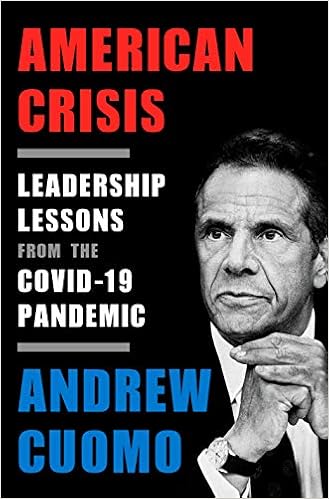 When COVID-19 besieged the United States, New York State emerged as the global “ground zero” for a deadly contagion that threatened the lives and livelihoods of millions. Quickly, Governor Andrew Cuomo provided the leadership to address the threat, becoming the standard-bearer of the organized response the country desperately needed. With infection rates spiking and more people dying every day, the systems and functions necessary to combat the pandemic in New York—and America—did not exist. So Cuomo undertook the impossible. He unified people to rise to the challenge and was relentless in his pursuit of scientific facts and data. He quelled fear while implementing an extraordinary plan for flattening the curve of infection. He and his team worked day and night to protect the people of New York, despite roadblocks presented by a president incapable of leadership and addicted to transactional politics. In his own voice, Andrew Cuomo chronicles the ingenuity and sacrifice required of so many to fight the pandemic, sharing the decision-making that shaped his policy as well as his frank accounting and assessment of his interactions with the federal government, the White House, and other state and local political and health officials. Real leadership, he shows, requires clear communication, compassion for others, and a commitment to truth-telling—no matter how frightening the facts may be. A remarkable portrait of selfless leadership and a gritty story of difficult choices that points the way to a safer future for all of us.
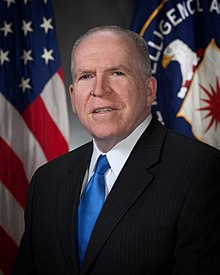 Friday, January 6, 2017: On that day, as always, John Brennan’s alarm clock was set to go off at 4:15 a.m. But nothing else about that day would be routine. That day marked his first and only security briefing with President-elect Donald Trump. And it was also the day John Brennan said his final farewell to Owen Brennan, his father, the man who had taught him the lessons of goodness, integrity, and honor that had shaped the course of an unparalleled career serving his country from within the intelligence community.
 Growing up as a paralyzed girl during the 90s and early 2000s, Rebekah Taussig only saw disability depicted as something monstrous (The Hunchback of Notre Dame), inspirational (Helen Keller), or angelic (Forrest Gump). None of this felt right; and as she got older, she longed for more stories that allowed disability to be complex and ordinary, uncomfortable and fine, painful and fulfilling. Writing about the rhythms and textures of what it means to live in a body that doesn’t fit, Rebekah reflects on everything from the complications of kindness and charity, living both independently and dependently, experiencing intimacy, and how the pervasiveness of ableism in our everyday media directly translates to everyday life. Disability affects all of us, directly or indirectly, at one point or another. By exploring this truth in poignant and lyrical essays, Taussig illustrates the need for more stories and more voices to understand the diversity of humanity. SITTING PRETTY challenges us as a society to be patient and vigilant, practical and imaginative, kind and relentless, as we set to work to write an entirely different story.
 Six days after giving birth, a polar bear named Aurora got up and left her den at the Columbus Zoo, leaving her tiny, squealing cub to fend for herself. Hours later, Aurora still hadn’t returned. The cub was furless and blind, and with her temperature dropping dangerously, the zookeepers entrusted with her care felt they had no choice: They would have to raise one of the most dangerous predators in the world themselves, by hand. Over the next few weeks, a group of veterinarians and zookeepers would work around the clock to save the cub, whom they called Nora. Humans rarely get as close to a polar bear as Nora’s keepers got with their fuzzy charge. But the two species have long been intertwined. Three decades before Nora’s birth, her father, Nanuq, was orphaned when an Inupiat hunter killed his mother, leaving Nanuq to be sent to a zoo. That hunter, Gene Agnaboogok, now faces some of the same threats as the wild bears near his Alaskan village of Wales, on the westernmost tip of the North American continent. As sea ice diminishes and temperatures creep up year-after-year, Gene and the polar bears—and everyone and everything else living in the far north—are being forced to adapt. Not all of them will succeed. Sweeping and tender, THE LONELIEST POLAR BEAR explores the fraught relationship humans have with the natural world, the exploitative and sinister causes of the environmental mess we find ourselves in, and how the fate of polar bears is not theirs alone.