
A book on the crisis of focus, by Dr. Gloria Mark, Chancellor’s Professor of Informatics at the University of California, Irvine, visiting senior researcher at Microsoft Research, and a leading expert in the fields of attention, multitasking, and human-computer interaction.
ATTENTION SPAN:
The Surprising Science of How We Focus, Why That’s Changing, and How Rhythm Became the New Flow
by Gloria Mark
Hanover Square Press, early 2023
(via Park & Fine)
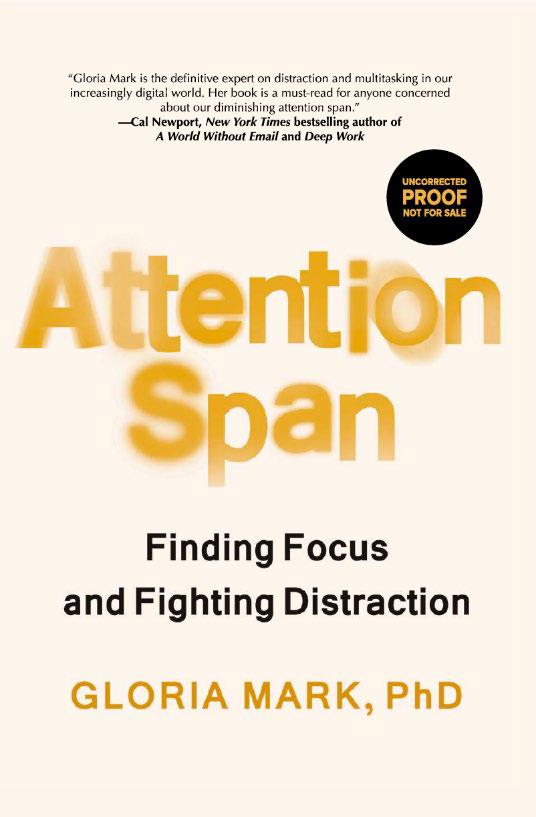 Psychologist Gloria Mark began researching how technology affects human attention when the first personal computers were beginning to arrive in offices. Over the last 30 years, she has tracked changes in our attention spans, stress levels, and the fundamental way our brains process information.
Now in ATTENTION SPAN, Dr Mark shows how much of what we think we know about attention is wrong. She explores the current crisis of focus and productivity that is so deeply entwined with rising rates of anxiety and depression, and investigates what we might be able to do about it. Delving into the newly celebrated concept of ‘kinetic attention’, she introduces a more balanced understanding of the rhythm between deep focus and less focused states, which may actually serve to make us happier and more productive in the long term.
« Gloria Mark is the definitive expert on distraction and multitasking in our increasingly digital world. Her book is a must-read for anyone concerned about our diminishing attention span. » —Cal Newport, New York Times bestselling author of A World Without Email and Deep Work
Dr. Gloria Mark is Chancellor’s Professor of Informatics at the University of California, Irvine, visiting senior researcher at Microsoft Research, and a leading expert in the fields of attention, multitasking, and human-computer interaction. Dr. Mark has spoken on stages that include SXSW, Talks at Google, Microsoft Faculty Summit, and the Aspen Ideas Festival, and her work has been featured in The New York Times, Fast Company, The Atlantic, The New Yorker, NPR, Quartz, Slate, and more.
 Every year millions of pediatric patients could benefit from hypnosis therapy to deal with and alleviate physical and psychological symptoms big and small. The benefits of hypnosis-facilitated therapy range from complete cures to small improvements. They extend beyond the physical and into the psychological and spiritual, building confidence, positivity and resilience. They include the empowerment of children with chronic health issues to feel more in control of their own minds, bodies and circumstances. They sometimes lead to the reduction or even elimination of medications. Hypnosis is painless, non-invasive, and cost-effective. It doesn’t preclude any other treatment, and drawbacks are virtually nonexistent.
 Thirteen essays are included that explore the evocative scents of trees, from the smell of a book just printed as you first open its pages, to the calming scent of Linden blossom, to the ingredients of a particularly good gin & tonic. In your hand: a highball glass, beaded with cool moisture. In your nose: the aromatic embodiment of globalized trade. The spikey, herbal odour of European juniper berries. A tang of lime juice from a tree descended from wild progenitors in the foothills of the Himalayas. Bitter quinine, from the bark of the South American cinchona tree, spritzed into your nostrils by the pop of sparkling tonic water. Take a sip, feel the aroma and taste of three continents converge.
 FOOLED is a book about why we fall for the schemes of liars, deceivers, marketers, con artists, and anyone else who tries to trick us into believing or doing something in their interest rather than our own. It identifies ten specific reasons why we are easily deceived, drawing upon classic and current research in cognitive psychology and the social sciences to explain exactly how deception works, why all of us are fooled at least some of the time, and how we can avoid being scammed—or even scam the scammers in return. FOOLED is not a book about why people cheat, but about how they manage to get away with it.
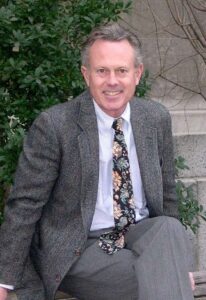 In April 1975, Ralph White was asked by his boss to transfer from the Bangkok branch of the Chase Manhattan Bank to the Saigon Branch. He was tasked with closing the branch if and when it appeared that Saigon would fall to the North Vietnamese army and ensure the safety of the senior Vietnamese employees.