
The hilarious new novel set in Florida from Pulitzer Prize-winning columnist and New York Times bestselling author Dave Barry.
SWAMP STORY
by Dave Barry
Simon & Schuster, May 2023
(via Writers House)
 Jesse Braddock is trapped, living in a tiny cabin deep in the Everglades with her infant daughter and her exboyfriend, a wannabe reality-TV star who turned out to be a lot prettier on the outside than on the inside. Broke and desperate for a way out, Jesse stumbles across a long-lost treasure, which could solve all her problems—if she can figure out how to keep it. The problem is, some very bad men are also looking for the treasure, and they know Jesse knows where it is. Meanwhile Jesse’s ex has become involved with Ken Bortle, of Bortle Brothers Bait & Beer, who has hatched an insane scheme to attract tourists to his failing store by making viral videos of a creature called the Everglades Melon Monster, which is in fact an unemployed alcoholic newspaperman named Phil wearing a repurposed Dora the Explorer costume head. Incredibly, this plan is wildly successful, which means a huge horde of Tik-Tokkers swarm into the swamp looking for the monster at the same time a variety of villains are hunting for Jesse. In the midst of this mayhem a presidential hopeful arrives in the Everglades to preside over the official launch of the Python Challenge. Needless to say it does not go as planned. In fact nothing in this story goes as planned. This is, after all, Florida.
Dave Barry is the author of more bestsellers than you can count on two hands, including Lessons From Lucy, Dave Barry’s Complete Guide to Guys, Dave Barry Turns 40, and Dave Barry Is Not Making This Up. A wildly popular syndicated columnist best known for his booger jokes, Barry won the 1988 Pulitzer Prize for commentary. He lives in Miami.
 Each year, thousands of refugees hailing from far-flung origins in South Asia and sub-Saharan Africa pay anywhere from $20,000 to upwards of $60,000 a head to traverse the Western Hemisphere, using the Americas as a cross-continental land bridge to the U.S.-Mexico border. They all follow a nearly identical path: Beginning in Brazil; then on to Peru; then Ecuador; followed by Colombia, Panama, Costa Rica, Nicaragua, Honduras, and Guatemala, to reach Mexico. Last stop—the United States. A broken U.S. immigration system and the largest displacement of people in modern history, with some 50 million more migrants today than even just a decade ago, have together birthed this billiondollar black market of smuggling human beings across the world to the United States’ doorstep. This is “The Route.” No journalist or writer has covered “The Route” from start to finish—Molly O’Toole will be the first to do so. THE ROUTE
 “
“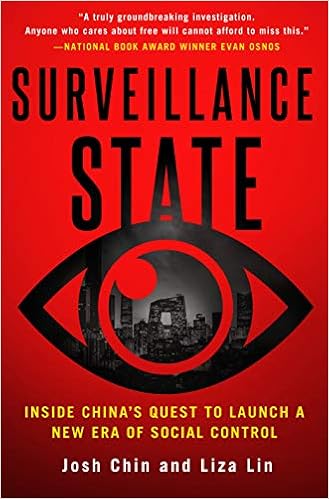 People living in democracies have for decades drawn comfort from the notion that their form of government, for all its flaws, is the best history has managed to produce. SURVEILLANCE STATE documents with startling detail how even as China’s Communist Party pays lip service to democracy as a core value of “socialism with Chinese characteristics,” it is striving for something new: a political model that shapes the will of the people not through the ballot box but through the sophisticated―and often brutal―harnessing of data.
 Do you feel just a bit crap, most of the time? We’re not talking major depression here but rather that constant underlying feeling of being underwater, struggling beneath the surface of life. It’s because of your tiny t – the small, everyday traumas that you’ve endured all your life which have led you to living on autopilot, slightly numb to the world. This book will show you how to come alive once again – and flourish, rather than languish, in a life less lived.