
In a sweeping intellectual narrative, award-winning neuroscientist and author Erik Hoel argues there are two fundamental perspectives on reality: the intrinsic and the extrinsic. The intrinsic perspective is that of consciousness and experience, the feelings and sensations that make up your waking world. The extrinsic perspective is that of science, which views the universe as a set of mechanisms and relations.
THE WORLD BEHIND THE WORLD:
Consciousness, Free Will, and the Limits of Science
by Erik Hoel
Avid Reader, Fall 2023
(via Writers House)
 The two perspectives have had an uneasy, sometimes troubled relationship. Throughout history some cultures have emphasized one perspective more than the other, which has radically changed how humans think about and conceptualize our own selves. Technologies and media often implicitly enforce one perspective: for instance, television and movies take the extrinsic perspective, exploring the world of relations and images, while literature and novels take the intrinsic perspective, exploring the world of consciousness.
Hoel offers a whirlwind tour of the two perspectives across the ages, like how the intrinsic perspective is absent from Homeric epics and earlier eras, its historical development and ultimate culmination in the invention of the novel, the separation of the two perspectives by Galileo Galilei when he recommended science remove the observer to focus solely on the extrinsic, and the reintroduction of the intrinsic perspective to science by Francis Crick, the discoverer of DNA, who proposed a search for the neural correlates of consciousness that continues to this day.
Hoel shows how our picture of reality is incomplete following Galileo’s separation and emphasis on the extrinsic. The ignored intrinsic perspective sheds light on fundamental scientific questions like causation, emergence, how the brain functions, the biological purpose of dreaming, artificial intelligence, and even why humans create art. He reveals how our own culture is becoming more based in the extrinsic perspective over time, neglecting the intrinsic and forgetting the importance of human consciousness, all to its cultural, scientific, and artistic detriment.
Ultimately, the two perspectives have stood apart for too long and must be reunited. To this end Hoel proposes a way to merge the intrinsic and the extrinsic in a radical new theory of consciousness.
Erik Hoel received his PhD in neuroscience from the University of Madison-Wisconsin. He is a research assistant professor at Tufts University and was previously a postdoctoral researcher at Columbia University in the NeuroTechnology Lab, and a visiting scholar at the Institute for Advanced Study in Princeton. Hoel is a 2018 Forbes “30 under 30” for his neuroscientific research on consciousness. His first novel, The Revelations, was published in April 2021 by The Overlook Press. He lives in Massachusetts.
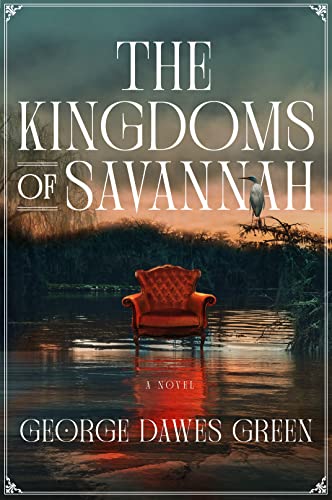 When matriarch Morgana Musgrove calls upon her prodigal son Ransom to help her with a case, the defunct M. Musgrove & Family Detective Agency is back in business, albeit reluctantly. Tensions rise between the Musgroves and whispers of a mysterious lost “Kingdom”—descendants of the African-American soldiers who fought for King George, and afterwards formed a secret community, refusing to return to slavery—float in the sultry Savannah night. The family of investigators creeps closer and closer to exposing the city’s seedy underbelly, and a depraved history that a powerful few are determined to keep hidden, no matter the
  Carla Karolac is doing just fine. Having escaped the clutches of her controlling mother and founded a successful writing retreat in which participants are confined to windowless cells until they hit their daily word count, she lives a comfortable, if solitary, existence. If only her therapist, Toonie, would stop going on about Carla’s nonexistent love life and start addressing her writer’s block, she might be able to make some progress. But then Carla finds Toonie murdered, and suddenly her unfinished memoir is the least of her concerns. Without quite knowing why, she dials an old phone number.
 Razia Mirza lives in a tight-knit Muslim neighborhood in Corona, Queens. She has known her best friend Saima since she was born. Broken into three sections, ROSES, IN THE MOUTH OF A LION first chronicles their friendship as city children who find misadventures among the wild grape vines and weeds growing in the parking lots of Queens. When the friendship ends, Razia’s grief and loss transform her forever. In the second section, Razia befriends Taslima, a new girl in the community. Together, they chafe at the restrictions imposed on them and embark on small rebellions: listening to scandalous American music, wearing mini-skirts, and cutting school to explore the city, as Razia begins to question some of the traditions her parents expect her to follow. Section three takes Razia further afield when she’s admitted to Stuyvesant, a specialized high school in Manhattan. There she meets Angela, who lives with her Bohemian mother in the East Village. Razia is attracted to Angela in a way that surprises her but fills her with a new joy of understanding. When their queer relationship is discovered by a Pakistani Aunty in the community, Razia is forced to choose between her family and her own future. Following Razia from girlhood to young adulthood, this novel beautifully chronicles her journey toward reconciling her heritage and Muslim traditions with her desire to be true to her life path. With humor and pathos, we delve into the emotional complexities of religious communities, female friendship and queer desire.
 L.A. is parched, dry as a bone, and all Oscar, the weather-obsessed patriarch of the Alvarado family, desperately wants is a little rain. He’s harboring a costly secret that distracts him from everything else. His wife, Keila, desperate for a life with a little more intimacy and a little less Weather Channel, feels she has no choice but to end their marriage. Their three daughters―Claudia, a television chef with a hard-hearted attitude; Olivia, a successful architect who suffers from gentrification guilt; and Patricia, a social media wizard who has an uncanny knack for connecting with audiences but not with her lovers―are blindsided and left questioning everything they know. Each will have to take a critical look at her own relationships and make some tough decisions along the way.