
In this moving, emotional narrative of love and resilience, a young couple confronts the start of
Argentina’s Dirty War in the 1970s, and a daughter searches for truth twenty years later.
ON A NIGHT OF A THOUSAND STARS
by Andrea Y. Clark
Grand Central, Spring 2022
(via Writers House)
 New York, 1998. Santiago Larrea, a wealthy Argentine diplomat, is holding court alongside his wife, Lila, and their daughter, Paloma, a college student and budding jewelry designer, at their annual summer polo match and soiree. All seems perfect in the Larreas’ world—until an unexpected party guest from Santiago’s university days shakes his usually unflappable demeanor. The woman’s cryptic comments spark Paloma’s curiosity about her father’s past, of which she knows little.
When the family travels to Buenos Aires for Santiago’s UN ambassadorial appointment, Paloma is determined to learn more about his life in the years leading up to the military dictatorship of 1976. With the help of a local university student, Franco Bonetti, an activist member of H.I.J.O.S—a group whose members are the children of the Desaparecidos, or the “Disappeared,” men and women who were forcibly disappeared by the state during Argentina’s “Dirty War”—Paloma unleashes a chain of events that not only leads her to question her family and her identity, but also puts her life in danger.
In compelling fashion, ON A NIGHT OF A THOUSAND STARS speaks to relationships, morality, and identity during a brutal period in Argentinian history, and the understanding—and redemption—people crave in the face of tragedy.
Andrea Y. Clark grew up in Argentina amid the political violence of the 1970s until her family moved to North America. After completing her university studies, she returned to Buenos Aires to reconnect with her roots. She followed with interest the stories then emerging about the children of the “Disappeared”—the youngest victims of Argentina’s military dictatorship in the 1970s—who were coming of age and grappling with the fates of their families. She conducted numerous interviews documenting their stories, which inspired her debut novel of historical fiction.
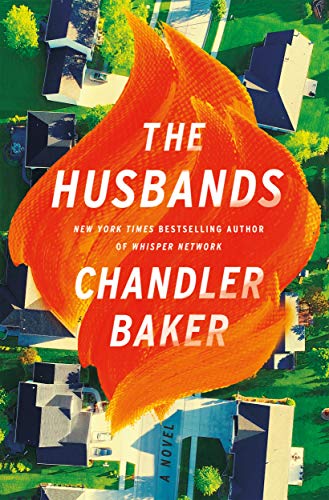 Nora Spangler is a successful attorney but when it comes to domestic life, she packs the lunches, schedules the doctor appointments, knows where the extra paper towel rolls are, and designs and orders the holiday cards. Her husband works hard, too… but why does it seem like she is always working so much harder? When the Spanglers go house hunting in Dynasty Ranch, an exclusive suburban neighborhood, Nora meets a group of high-powered women—a tech CEO, a neurosurgeon, an award-winning therapist, a bestselling author—with enviably supportive husbands. When she agrees to help with a resident’s wrongful death case, she is pulled into the lives of the women there. She finds the air is different in Dynasty Ranch. The women aren’t hanging on by a thread. But as the case unravels, Nora uncovers a plot that may explain the secret to having-it-all. One that’s worth killing for. Calling to mind a Stepford Wives gender-swap, THE HUSBANDS imagines a world where the burden of the “second shift” is equally shared—and what it may take to get there.
 Ballet flows through their veins. Dara and Marie Durant were dancers since birth, with their long necks and matching buns and pink tights, homeschooled and trained by their mother. Decades later the Durant School of Dance is theirs. The two sisters, together with Charlie, Dara’s husband and once their mother’s prize student, inherited the school after their parents died in a tragic accident nearly a dozen years ago. Marie, warm and soft, teaches the younger students; Dara, with her precision, trains the older ones; and Charlie, back broken after years of injuries, rules over the back office. Circling around each other, the three have perfected a dance, six days a week, that keeps the studio thriving. But when a suspicious accident occurs, just at the onset of the school’s annual performance of The Nutcracker, a season of competition, anxiety, and exhilaration, an interloper arrives and threatens the delicate balance of everything they’ve worked for.
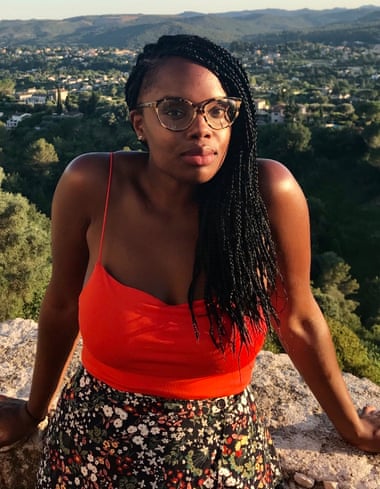 When Sutanya Dacres married her French boyfriend and moved to Paris in 2013, she felt like she was living out her very own fairy tale. Jamaican-born and New York-raised, she had never entertained fantasies of living abroad, until her grad school days when she discovered the blogs of expat women living in Paris and began to dream of a different life in a different land. Then she met a French man in a bar, fell in love, and voilà, almost as if she willed it, she was living her Parisian fantasy, embarking on her own “happily ever after” … until her marriage fell apart. Sutanya looked back to her beloved bloggers for guidance, but realized their rosé-tinted reality didn’t match up to her own. For one thing, they weren’t writing about divorce. For another, they weren’t Black. While her marriage had ended and the façade of picture-perfect Paris had cracked, Sutanya wasn’t giving up on the City of Light. Instead, she decided to figure out for herself what happens after the Paris fairy tale ends, and to find a way to mend her broken heart and create a home for herself, beginning in her kitchen. Determined to share her genuine, candid perspective and offer a counter-narrative to the typical idealized expat story, Sutanya launched her podcast, Dinner for One, in February 2018. In each episode, she invites listeners into her Paris kitchen as she shares her experiences as a 30-something hopeless romantic embracing her post-divorce life and celebrating the joy of learning to love cooking for herself. This book grew out of the podcast.
 Taking us from the slave era, when white women fought in court to keep “ownership” of their slaves, through the centuries of colonialism, when they offered a soft face for brutal tactics, to the modern workplace, White Tears/Brown Scars tells a charged story of white women’s active participation in campaigns of oppression. It offers a long overdue validation of the experiences of women of color. Discussing subjects as varied as The Hunger Games, Alexandria Ocasio-Cortez, the viral BBQ Becky video, and 19th century lynchings of Mexicans in the American Southwest, Ruby Hamad undertakes a new investigation of gender and race. She shows how the division between innocent white women and racialized, sexualized women of color was created, and why this division is crucial to confront. Along the way, there are revelatory responses to questions like: Why are white men not troubled by sexual assault on women? (See Christine Blasey Ford.) With rigor and precision, Hamad builds a powerful argument about the legacy of white superiority that we are socialized within, a reality that we must apprehend in order to fight.