
The enchanting beginning of an epic West African and African Diaspora-inspired fantasy adventure for middle-grade readers about a reluctant apprentice to magic and the stolen villagers she sets out to save, by author P. Djèlí Clark, winner of the Nebula, Alex, Locus, and British Fantasy Awards.
ABENI’S SONG
by P. Djèlí Clark
Starscape/Tor, July 2023
(via The Gernert Company)
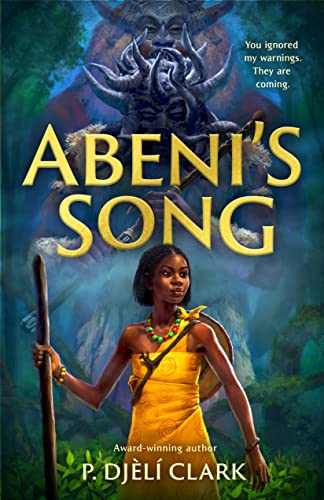 In darkness, a song can lead the way. Beware which one you listen to. On the day of the spirits festival, the old woman who lives in the forest appears in Abeni’s village with a terrible message: “You ignored my warnings. It’s too late to run. They are coming.”
The old woman hasn’t come to save them, only to collect one child as payment for her years of service and protection. When warriors with burning blades storm the village and a man with a cursed flute plays an impossibly alluring song, everyone Abeni has ever known and loved is captured and marched toward far-off ghost ships set for even more distant lands.
But not Abeni. Abeni escapes the warriors in the clutches of the old woman, magically whisked into the forest away from all she’s ever known. And there she begins her unwanted magical apprenticeship, her journey to escape the witch, and her impossible mission to bring her people home.
ABENI’S SONG is the beginning of a timeless, enchanting fantasy adventure about a reluctant apprentice, a team of spirit kids, and the village they set out to save from the evil Witch Priest who stole away Abeni’s people.
Born in New York and raised mostly in Houston, P. Djèlí Clark spent the formative years of his life in the homeland of his parents, Trinidad and Tobago. He is the author of the novel A Master of Djinn and the novellas Ring Shout, The Black God’s Drums, and The Haunting of Tram Car 015. He has won the Nebula, Locus, and Alex Awards and been nominated for the Hugo, World Fantasy, and Sturgeon Awards. His stories have appeared in online venues such as Tor.com, Daily Science Fiction, Heroic Fantasy Quarterly, Apex, Lightspeed, Beneath Ceaseless Skies, and in print anthologies, including Griots, Hidden Youth, and Clockwork Cairo. He is also a founding member of FIYAH Magazine of Black Speculative Fiction and an infrequent reviewer at Strange Horizons.
 A quick, straightforward, fast-paced read about Mateo, a boy who not only can fight off disease in a world where antibiotics have lost all of their power, but can heal others. This amazing kid is being hunted by those who want to harness and potentially extinguish his ability. When two detectives find themselves caught in the crossfire of the pursuit, they put their careers and their lives at risk, deciding to deliver Mat to The Resistance—an organization they’ve been trained to view as an enemy to the State but soon start to realize is probably society’s last, best hope.
  Beginning in his own hometown of New Orleans, Clint Smith leads the reader through an unforgettable tour of monuments and landmarks—those that are honest about the past and those that are not—that offer an intergenerational story of how slavery has been central in shaping our nation’s collective history, and ourselves. It is the story of the Monticello Plantation in Virginia, the estate where Thomas Jefferson wrote letters espousing the urgent need for liberty while enslaving over 400 people on the premises. It is the story of the Whitney Plantation, one of the only former plantations devoted to preserving the experience of the enslaved people whose lives and work sustained it. It is the story of Angola, a former plantation-turned maximum security prison in Louisiana that is filled with Black men who work across the 18,000-acre land for virtually no pay. And it is the story of Blandford Cemetery, the final resting place of tens of thousands of Confederate soldiers. In a deeply researched and transporting exploration of the legacy of slavery and its imprint on centuries of American history, HOW THE WORD IS PASSED illustrates how some of our country’s most essential stories are hidden in plain view—whether in places we might drive by on our way to work, holidays such as Juneteenth, or entire neighborhoods—like downtown Manhattan—on which the brutal history of the trade in enslaved men, women and children has been deeply imprinted.
 In its earliest days, WeWork promised the impossible: to make the American work place cool. Adam Neumann, an immigrant determined to make his fortune in the United States, landed on the idea of repurposing surplus New York office space for the burgeoning freelance class. Over the course of ten years, WeWork attracted billions of dollars from some of the most sought-after investors in the world, while spending it to build a global real estate empire that he insisted was much more than that: an organization that aspired to nothing less than « elevating the world’s consciousness. » Moving between New York real estate, Silicon Valley venture capital, and the very specific force field of spirituality and ambition erected by Adam Neumann himself, Billion Dollar Loser lays bare the internal drama inside WeWork. Based on more than two hundred interviews, this book chronicles the breakneck speed at which WeWork’s CEO built and grew his company along with Neumann’s relationship to a world of investors, including Masayoshi Son of Softbank, who fueled its chaotic expansion into everything from apartment buildings to elementary schools. Culminating in a day-by-day account of the five weeks leading up to WeWork’s botched IPO and Neumann’s dramatic ouster, Wiedeman exposes the story of the company’s desperate attempt to secure the funding it needed in the final moments of a decade defined by excess. Billion Dollar Loser is the first book to indelibly capture the highly leveraged, all-blue-sky world of American business in President Trump’s first term, and also offers a sober reckoning with its fallout as a new era begins.
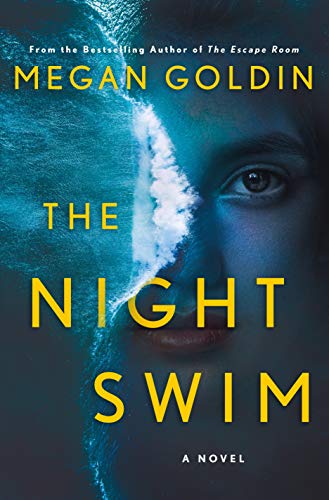 After the first season of her true crime podcast became an overnight sensation and set an innocent man free, Rachel Krall is now a household name—and the last hope for thousands of people seeking justice. But she’s used to being recognized for her voice, not her face. Which makes it all the more unsettling when she finds a note on her car windshield, addressed to her, begging for help. The small seaside town of Neapolis is being torn apart by a devastating rape trial. The town’s golden boy, a swimmer destined for Olympic greatness, has been accused of raping a high school student, the beloved granddaughter of the town’s legendary police chief. Under huge pressure to make Season Three of her podcast a success, Rachel throws herself into covering the rape trial —but the mysterious letters keep showing up in unexpected places. Someone is following her, and she won’t stop until Rachel finds out what happened to her sister twenty-five years ago. Officially, Jenny Stills tragically drowned while swimming at night at a local beach, but the writer insists her sister was murdered—and when Rachel starts asking questions, nobody seems to want to answer. The past and present start to collide as Rachel uncovers startling connections between the two cases, connections that will change the course of the trial and the lives of everyone involved. Electrifying and propulsive, THE NIGHT SWIM asks: Can a small town ever right the wrongs of its past? And what really happened to Jenny Stills?