
An award-winning University of Pennsylvania neuroscientist reveals the hidden calculations that shape our daily decisions—and how to make more fulfilling, impactful choices in our work, relationships, and lives.
WHAT WE VALUE:
The Neuroscience of Choice and Change
by Dr. Emily Falk
Norton, April 2025
(via Park & Fine Literary and Media)
 Why is it so hard to stick with the choices we want to make? We decide to be healthier, but we snack all afternoon. We resolve to prioritize family time, but we end up working late into the evening. Change is hard – even when we really want, or need, to make it. Amid the many competing priorities of our busy lives, it can feel difficult to make the right decisions―ones that feel aligned with the things we care about. In this book, award-winning researcher Emily Falk reveals how we can transform our relationship with the daily choices that define our lives by thinking like a neuroscientist about what we value.
Introducing us to three brain systems responsible for computing our everyday decisions in a process known as the value calculation, Falk shows how we can work more strategically with our brains to make more fulfilling choices. Whether deciding on lunch or a career, changing our routines or other people’s minds, we learn how changing what we think about can change what we think, connecting with our core values can make us less defensive, and broadening our curiosity about different perspectives can seed innovation. Based on cutting-edge research, WHAT WE VALUE is a groundbreaking guide to finding new possibilities in our choices―and the lives we ultimately make with them.
Emily Falk is a professor of communication, psychology, and marketing at the University of Pennsylvania, where she also directs the Communication Neuroscience Lab and serves as associate dean for research at the Annenberg School for Communication. Her work on the science of attitude and behavior change has been widely covered in the popular press and recognized with numerous awards, including early career awards from the Social & Affective Neuroscience Society and the Association for Psychological Science, the National Institute of Health Director’s New Innovator Award, and more. She lives in Philadelphia.
 As Detective Al Sullivan attempts to solve the case of murdered presidential candidate Walter Wilkinson, shot in his suite at the fabled Claremont Hotel, he finds his investigation leading back again and again to the 1930 death of 7 year-old Iris Stafford, a descendant of the Bainbridge clan, one of San Francisco’s wealthiest families. Yet the threads connecting candidate Walter Wilkinson to the long-dead girl are tangled – and the clues obscured by the turbulent crosswinds of the ongoing war, the Japanese American internment, California’s racist legacy and simmering labor unrest.
 Anxiety affects more than forty million Americans—a number that continues to climb in the wake of the COVID-19 pandemic. While conventional medicine tends to view anxiety as a “neck-up” problem—that is, one of brain chemistry and psychology—the truth is that the origins of anxiety are rooted in the body.
 For Sewanee Chester, being an audiobook narrator is a long way from her old dreams, but the days of being a star on film sets are long behind her. She’s found success and satisfaction from the inside of a sound booth and it allows her to care for her beloved, ailing grandmother. When she arrives in Las Vegas last-minute for a book convention, Sewanee unexpectedly spends a whirlwind night with a charming stranger.
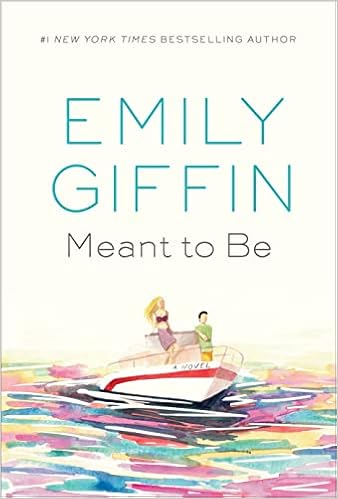 The Kingsley family is American royalty, beloved for their military heroics, political service, and unmatched elegance. In 1967, after Joseph S. Kingsley, Jr. is killed in a tragic accident, his charismatic son inherits the weight of that legacy. But Joe III is a free spirit—and a little bit reckless. Despite his best intentions, he has trouble meeting the expectations of a nation, as well as those of his exacting mother, Dottie.