
Covid’s serious neurological after-effects: causes, treatments, and your chance of recovery, by one of Germany’s best-known brain researchers, specializing in how inflammatory processes influence brain performance. Based on the latest research findings
LONG COVID
by Prof. Dr. Martin Korte
DVA, October 2022
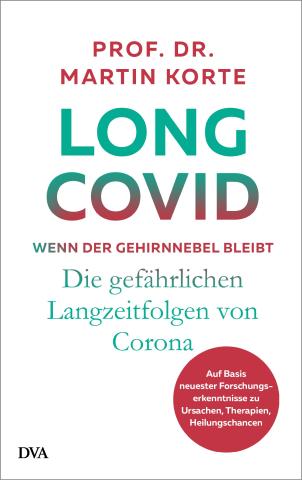 Exhaustion, breathlessness, loss of taste, brain fog, problems concentrating: about ten percent of Covid patients report these and other similar symptoms, months after first catching the virus. It doesn’t matter if their original symptoms were mild, and even the young and usually fit and healthy are affected. Not only that, but the latest studies show that Covid can accelerate brain ageing, meaning that the number of people suffering from dementia could rise sharply in the next few years. This alarming discovery suggests that long Covid really is the new endemic disease, and doctors and scientists have issued warnings about the long-term consequences for both individual patients and society at large.
In his new book, Martin Korte, who is researching long Covid at the Helmholtz Centre for Infection Research and Braunschweig Technical University, reveals how viral infections can damage our brains and cause lifelong conditions affecting people of all ages. He also explains how we can minimise the risk of long Covid, what treatments are available, and what we can do to regain our physical and mental fitness.
Martin Korte is one of Germany’s foremost neuroscientists. He is Professor of Neurobiology at Braunschweig Technical University and head of the Neuroinflammation and Neurodegeneration research group at the Helmholtz Centre for Infection Research in Braunschweig. He specialises in the cellular basis of learning and memory, and the interaction between the immune and nervous systems in the context of Alzheimer’s. He and his research group were among the first to show that viral respiratory diseases can cause the immune system to overreact, causing long-term damage to the brain. He is currently involved in research into long Covid. Korte is a much sought-after expert, and will be familiar to many from his frequent talks and TV appearances.
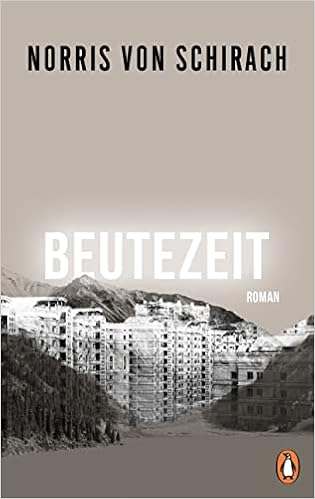 When Vladimir Putin becomes president in January 2000, Anton, a rich commodities trader, flees Moscow. Behind him lie eight breathtaking years in post-Soviet predatory capitalism, ahead of him yawning boredom in the well-off milieu of New York. But even at forty, Anton is still an incorrigible romantic in search of the next thrill. Then a headhunter makes him an enticing offer. Anton is to build up a steel company in Kazakhstan, which is so rich in mineral resources, with money from anonymous sources. The German embarks on the adventure and learns painfully how local clans and insatiable elites ruthlessly defend the loot they have amassed after the fall of the Soviet Union. Nevertheless, Anton finds allies and makes a momentous pact.
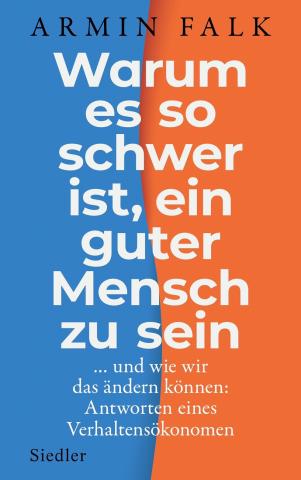 Would you save a life for 100 euros? The answer has to be yes – doesn’t everyone want to do the right thing? But Armin Falk, Germany’s leading behavioural economist, shows that we often do bad things despite wanting to be good, and are far from being as good as we like to think.
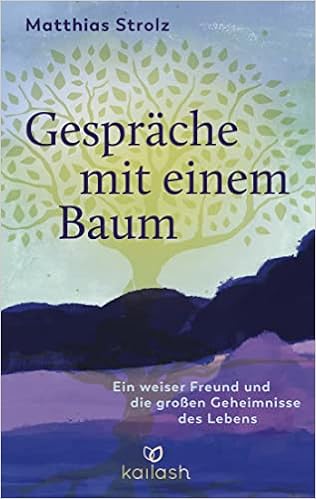 When he realises he is able to converse with his favourite tree, Matthias Strolz sets out on a journey of discovery that takes him through the essential questions of life that affect us deeply and make us human, eventually leading him to his personal « inner place ». His intensive, entertaining, and profound conversations with the magical tree revolve around birth and death, time and space, God and religion, politics and the state, money and power, job and success, pain and joy, and happiness and love. Knowledge and inner truths will come to fruition through the universal connectedness of everything in existence.
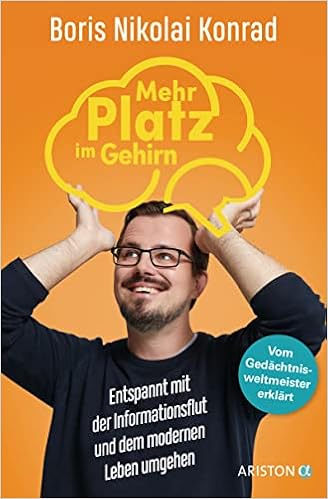 The human brain is quite remarkable and is most often compared very favorably with high-performance computers. How is it then that we still have the feeling constantly forgetting things, being late to appointments, and having a hopelessly crowded head? Boris Nikolai Konrad helps us regain control of our cerebral processes. This neuroscientist first illustrates the amazing ways the brain functions. He then explains how we can improve how we use our brains. With his techniques we can learn to experience full relaxation without yoga, to remember every name with ease – and to finally eliminate the chaos in our head.