
What would happen if we called on God for help and God actually appeared? In Mitch Albom’s profound new novel of hope and faith, a group of shipwrecked passengers pull a strange man from the sea. He claims to be “the Lord.” And he says he can only save them if they all believe in him.
THE STRANGER IN THE LIFEBOAT
by Mitch Albom
HarperCollins, November 2021
(via David BlackLiterary)
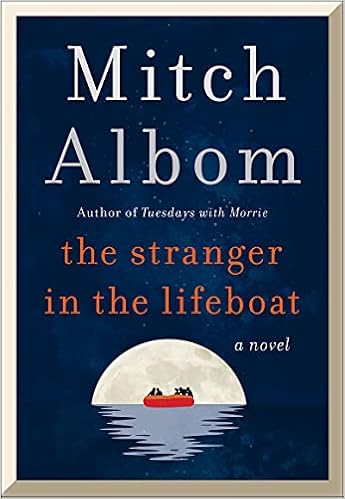 Adrift in a raft after a deadly ship explosion, nine people struggle for survival at sea. Three days pass. Short on water, food and hope, they spot a man floating in the waves. They pull him in. “Thank the Lord we found you,” a passenger says. “I am the Lord,” the man whispers.
So begins Mitch Albom’s most beguiling and inspiring novel yet. Albom has written of heaven in the celebrated number one bestsellers The Five People You Meet in Heaven and The First Phone Call from Heaven. Now, for the first time in his fiction, he ponders what we would do if, after crying out for divine help, God actually appeared before us? What might the Lord look, sound and act like? In THE STRANGER IN THE LIFEBOAT, Albom keeps us guessing until the end: Is this strange and quiet man really who he claims to be? What actually happened to cause the explosion? Are the survivors already in heaven, or are they in hell?
The story is narrated by Benji, one of the passengers, who recounts the events in a notebook that is later discovered—a year later—when the empty life raft washes up on the island of Montserrat. It falls to the island’s chief inspector, Jarty LeFleur, a man battling his own demons, to solve the mystery of what really happened.
A fast-paced, compelling novel that makes you ponder your deepest beliefs, The Stranger in the Lifeboat suggests that answers to our prayers may be found where we least expect them.
Mitch Albom is a bestselling author, screenwriter, playwright and nationally syndicated columnist. The author of five consecutive #1 New York Times bestsellers, his books have collectively sold more than thirty-three million copies in forty-two languages worldwide. Tuesdays With Morrie, which spent four straight years atop the New York Times list, is now the bestselling memoir of all time. Four of Albom’s books, including Morrie, The Five People You Meet in Heaven, For One More Day, and Have a Little Faith, have been made into highly acclaimed TV movies for ABC. Oprah Winfrey produced Tuesdays With Morrie, which claimed four Emmy awards including a best actor nod for Jack Lemmon in the lead role. Albom has founded six charities in and around Detroit, including the first-ever twenty-four-hour medical clinic for homeless children in America, and also operates an orphanage in Port-Au-Prince, Haiti. Albom lives with his wife, Janine, in metropolitan Detroit.
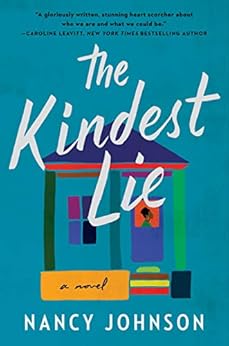 A promise could betray you. It’s 2008, and the inauguration of President Barack Obama ushers in a new kind of hope. In Chicago, Ruth Tuttle, an Ivy-League educated Black engineer, is married to a kind and successful man. He’s eager to start a family, but Ruth is uncertain. She has never gotten over the baby she gave birth to—and was forced to leave behind—when she was a teenager. She had promised her family she’d never look back, but Ruth knows that to move forward, she must make peace with the past. Returning home, Ruth discovers the Indiana factory town of her youth is plagued by unemployment, racism, and despair. As she begins digging into the past, she unexpectedly befriends Midnight, a young white boy who is also adrift and looking for connection. Just as Ruth is about to uncover a burning secret her family desperately wants to keep hidden, a traumatic incident strains the town’s already searing racial tensions, sending Ruth and Midnight on a collision course that could upend both their lives. THE KINDEST LIE examines the heartbreaking divide between Black and white communities and plumbs the emotional depths of the struggles faced by ordinary Americans in the wake of the financial crisis. Capturing the profound racial injustices and class inequalities roiling society, Nancy Johnson’s debut novel offers an unflinching view of motherhood in contemporary America and the never-ending quest to achieve the American Dream.
 Plum Winter has always come in second to her sister, the unbelievably cool, famous influencer Peach Winter. And when Peach is invited to an all-expenses paid trip to a luxurious art and music festival for influencers on a private island in the Caribbean, Plum decides to intercept the invite. This time, she’s going to have some fun. She convinces her two best friends Antonia and Marlowe to come with her—’cause hey, they were planning on a spring break trip anyway, right? But when Plum and her friends get to the island, it’s not anything like it seemed in the invite. The island is run-down, creepy, and there doesn’t even seem to be a festival—it’s just seven other quasi-celebrities and influencers. And then people start to die… Plum and her friends soon realize that someone has lured each of them to the « festival » to kill them. Someone has a vendetta against every person on the island–and no one is supposed to leave the island alive. So, together, Plum, Antonia, and Marlowe will do whatever it takes to unravel the mystery of the killer, and fight to save themselves and as many influencers as they can, before it’s too late.
 Three vastly different women: Shizuka Satomi, an aging, Hell-damned violin prodigy and teacher; Katrina Nyugen, a young transgender runaway and aspiring violinist; and Lan Tran, a spaceship captain running from a faraway war. Each woman descends on California’s predominantly Asian and Hispanic San Gabriel Valley seeking to rewrite her doomed fate. Each secretly dreams, despite forces working against her and closing in, of belonging to someone, of becoming someone’s family. Yet each is resigned to a life of carrying her burden alone. The only chance for Shizuka, Katrina, and Lan to survive on Earth rests in their finally recognizing who they are to one another — before it’s too late. LIGHT FROM UNCOMMON STARS will pull you in with its sensory pleasures, transportive depiction of place, masterful storytelling, and the warmth with which Aoki welcomes you into a neighborhood, as if you are already family. Aoki uses genre tropes to push the boundaries of imagination on behalf of her protagonists — people who, at the novel’s start, barely thought they were permitted to dream at all. Aoki’s characters, like herself, are women, queer, people of color. They are violinists full of innocence and regret. They are mothers trying to preserve the family business. They are refugees fleeing a war from beyond the stars. And they have come to the San Gabriel Valley, just outside of Los Angeles, a place where many drive past without a second thought, yet where others find magic and previously unthinkable love.
 Heico is an ornithologist fighting a losing battle to protect the birds in his beachside suburb. When a journalist asks for comment on a planned development, Heico exaggerates his reports on how many migratory birds use the site. Soon it is revealed that the proposed building is a mosque, and he finds himself embroiled in community resistance to the project. Still, he refuses to back down. As the delayed mosque project becomes a focal point for growing Islamophobia, Heico must confront his own ghosts, and the prejudices he insists he doesn’t have. Nahla is Heico’s house cleaner. Having recently arrived in Australia she is trying to find her place in a new country and a new marriage. Isolated and lonely, she sees the mosque as a symbol of what she hopes to find in Australia: community, familiarity, acceptance. But as resistance to the project intensifies, she must summon the courage and the language to speak out and claim her space in this new life.