
“A sparklingly beautiful memoir-in-vignettes” (Isaac Fitzgerald, New York Times bestselling author) that explores coming of age in your middle age—from the bestselling poet and author of Keep Moving.
YOU COULD MAKE THIS PLACE BEAUTIFUL: A Memoir
by Maggie Smith
Publisher, April 2023
(via David Black Literary)
 In her memoir, poet Maggie Smith explores the disintegration of her marriage and her renewed commitment to herself. The book begins with one woman’s personal heartbreak, but its circles widen into a reckoning with contemporary womanhood, traditional gender roles, and the power dynamics that persist even in many progressive homes. With the spirit of self-inquiry and empathy she’s known for, Smith interweaves snapshots of a life with meditations on secrets, anger, forgiveness, and narrative itself. The power of these pieces is cumulative: page after page, they build into a larger interrogation of family, work, and patriarchy.
YOU COULD MAKE THIS PLACE BEAUTIFUL, like the work of Deborah Levy, Rachel Cusk, and Gina Frangello, is an unflinching look at what it means to live and write our own lives. It is a story about a mother’s fierce and constant love for her children, and a woman’s love and regard for herself. Above all, this memoir is “extraordinary” (Ann Patchett) in the way that it reveals how, in the aftermath of loss, we can discover our power and make something new and beautiful.
Maggie Smith is the award-winning author of Good Bones, The Well Speaks of Its Own Poison, Lamp of the Body, and the national bestsellers Goldenrod and Keep Moving: Notes on Loss, Creativity, and Change. A 2011 recipient of a Creative Writing Fellowship from the National Endowment for the Arts, Smith has also received several Individual Excellence Awards from the Ohio Arts Council, two Academy of American Poets Prizes, a Pushcart Prize, and fellowships from the Sustainable Arts Foundation and the Virginia Center for the Creative Arts. She has been widely published, appearing in The New York Times, The New Yorker, The Paris Review, The Best American Poetry, and more.
 September 29, 1913: the steamship
 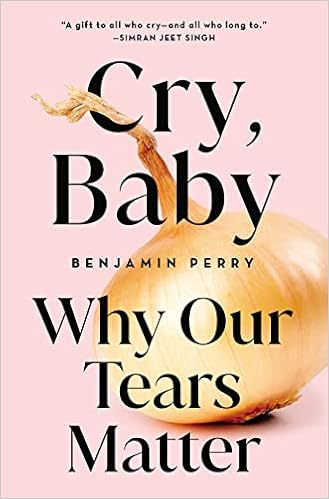 One of our most private acts, weeping can forge connection. Tears may obscure our vision, but they can also bring great clarity. And in both literature and life, weeping often opens a door to transformation or even resurrection. But many of us have been taught to suppress our emotions and hide our tears. When writer Benjamin Perry realized he hadn’t cried in more than ten years, he undertook an experiment: to cry every day. But he didn’t anticipate how tears would bring him into deeper relationship with a world that’s breaking.
 Most people want something in their life to change, whether it’s their job, their personal relationships, or their ability to live authentically. And sometimes, unwanted change comes all too swiftly. In THE ONLY CONSTANT, celebrated author and educator Najwa Zebian guides her readers through the changes we must make (or those we need to endure) on the journey to our most authentic lives. She quiets the noise, teaches us to accept ourselves as we are now, and focuses on the necessity and beauty of those messy transitional times.
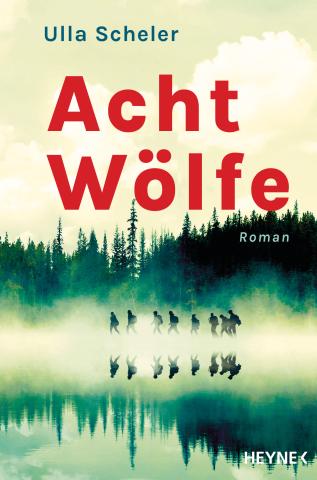 Eight young people join a guided hike through Canada’s biggest national park. For the next three weeks, they will experience the wilderness and see the Northern Lights. But even in the wilderness, you can end up in the wrong place at the wrong time. When they witness a crime, the eight have no choice but to run. Lost in the middle of nowhere, they have no equipment and nothing to help them find their way home. They also can’t stand each other. But their only chance of getting out of this alive is to work together.