
The funny, exuberant, inspiring antidote to body shame—a full-color graphic memoir celebrating the imperfections of the author’s female body in all its glory.
CHEEKY:
A Head-to-Toe Memoir
by Ariella Elovic
Bloomsbury, November 2020
(chez DeFiore and Co. – voir catalogue)
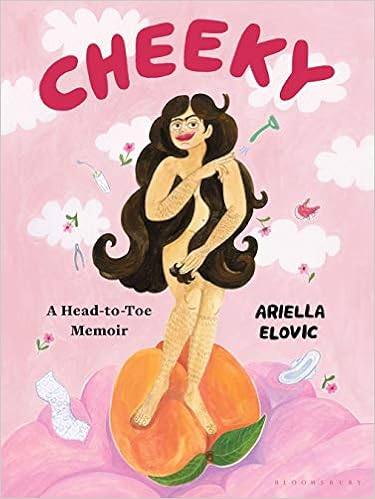 Too tall. Too short. Too fat. Too thin. The message is everywhere—we need to pluck, wax, shrink, and hide ourselves, to not take up space, emotionally or literally; women are never “just right.” Well, Ariella Elovic, feminist and illustrator extraordinaire, has had enough. In her full-color graphic memoir CHEEKY, she takes an inspiring and exuberant head-to-toe look at her own body self-consciousness, and body part by body part, finds her way back to herself. How does Ariella learn not to see herself as a never-finished DIY project, but to accept and even love the physical attributes society taught her to hide? How does a mirror go from a “black hole of critique” to a “who’s that girl” moment? Essential to her journey is her posse of girlfriends, her “yentas.” Together, they discover that sharing “imperfections” and some of the gross and “unsightly” things our bodies produce can be a source of endless laughs and deep bonding. It helps to have a team with some outside perspectives to keep our inner bullies in check. Charming and hilarious, full of empathy and candor, and gorgeously illustrated, CHEEKY aims to inspire women everywhere to embrace their bodies, flaws and all, and also their respective bodies’ needs, desires, and inherent power.
“An entertaining, jubilantly body-positive memoir.” —Kirkus Reviews
Ariella Elovic holds a BFA in Communication Design from Washington University in St. Louis. Her work has been featured by The New Yorker, Teen Vogue, Refinery29, Buzzfeed, KAAST, and Womanly Magazine. Ariella has collaborated with various female-interest brands, including Lunette Cup, What’s In Your Box?, Lunapads, and Cora for Women. She lives in New York.
 Three vastly different women: Shizuka Satomi, an aging, Hell-damned violin prodigy and teacher; Katrina Nyugen, a young transgender runaway and aspiring violinist; and Lan Tran, a spaceship captain running from a faraway war. Each woman descends on California’s predominantly Asian and Hispanic San Gabriel Valley seeking to rewrite her doomed fate. Each secretly dreams, despite forces working against her and closing in, of belonging to someone, of becoming someone’s family. Yet each is resigned to a life of carrying her burden alone. The only chance for Shizuka, Katrina, and Lan to survive on Earth rests in their finally recognizing who they are to one another — before it’s too late. LIGHT FROM UNCOMMON STARS will pull you in with its sensory pleasures, transportive depiction of place, masterful storytelling, and the warmth with which Aoki welcomes you into a neighborhood, as if you are already family. Aoki uses genre tropes to push the boundaries of imagination on behalf of her protagonists — people who, at the novel’s start, barely thought they were permitted to dream at all. Aoki’s characters, like herself, are women, queer, people of color. They are violinists full of innocence and regret. They are mothers trying to preserve the family business. They are refugees fleeing a war from beyond the stars. And they have come to the San Gabriel Valley, just outside of Los Angeles, a place where many drive past without a second thought, yet where others find magic and previously unthinkable love.
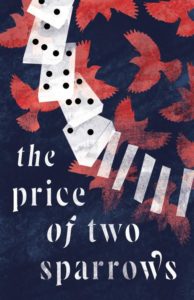 Heico is an ornithologist fighting a losing battle to protect the birds in his beachside suburb. When a journalist asks for comment on a planned development, Heico exaggerates his reports on how many migratory birds use the site. Soon it is revealed that the proposed building is a mosque, and he finds himself embroiled in community resistance to the project. Still, he refuses to back down. As the delayed mosque project becomes a focal point for growing Islamophobia, Heico must confront his own ghosts, and the prejudices he insists he doesn’t have. Nahla is Heico’s house cleaner. Having recently arrived in Australia she is trying to find her place in a new country and a new marriage. Isolated and lonely, she sees the mosque as a symbol of what she hopes to find in Australia: community, familiarity, acceptance. But as resistance to the project intensifies, she must summon the courage and the language to speak out and claim her space in this new life.
 Artificial intelligence is bringing a new digital order—it is changing war, surveillance, and disinformation, with profound effects on human freedom, global security, and power dynamics. THE BLACK BOX takes us inside the immensely competitive global struggle to lead in the four key elements of AI advantage: data, computing power, talent, and institutions. A world expert in AI-enabled weapons, Paul Scharre examines the strengths and weaknesses of today’s major superpowers, including China, the United States, Europe, and the Big Tech corporations that control the global supply of data and compute.