
 Soering, une série documentaire de True Crime en cinq parties sur l’affaire Jens Söring et le meurtre des Haysom, sera diffusée courant 2022 sur Netflix. Elle est tirée du livre RÜCKKEHR INS LEBEN paru en septembre 2021 chez C. Bertelsmann/PRH Verlagsgruppe, dans lequel Jens Söring parle de sa lutte pour retrouver une vie normale après avoir passé plus de trois décennies en prison aux États-Unis dans les conditions les plus sévères.
Condamné à perpétuité pour le meurtre particulièrement brutal des parents de sa petite amie de l’époque, Elizabeth Haysom, ce fils de diplomate a été incarcéré dès 1986. À ce jour, les doutes concernant sa culpabilité persistent : d’après lui, croyant bénéficier de l’immunité diplomatique, il est passé aux aveux uniquement pour éviter à sa petite amie la peine de mort. Il avait 19 ans lorsqu’il est entré en prison, et a vécu derrière les barreaux pendant presque toute sa vie d’adulte. Après avoir été libéré sur parole en décembre 2019, il est retourné en Allemagne à l’âge de 53 ans.
D’après Netflix, la série s’intéresse à « l’un des drames judiciaires les plus passionnants de notre époque. Le producteur de documentaires Arne Birkenstock, plusieurs fois récompensé, a eu accès à Jens Söring en exclusivité et, avec les réalisateurs Lena Leonhardt et Andre Hörmann, ouvre de nouvelles perspectives sur cette affaire criminelle spectaculaire qui continue de captiver les gens dans le monde entier. »
Les droits de langue française sont toujours disponibles.
 Even after a decades-long opioid overdose crisis, intense controversy still rages over the fundamental nature of addiction and the best way to treat it. With uncommon empathy and erudition, Carl Erik Fisher draws on his own experience as a clinician, researcher, and alcoholic in recovery as he traces the history of a phenomenon that, centuries on, we hardly appear closer to understanding—let alone addressing effectively.
 Far more alarming than the “sex recession,” the phenomenon of young people having less sex than generations before them, is that we are in the middle of a bad sex epidemic that all generations are suffering from, and no one is talking about it. In the age of swiping apps and sliding into DMs, there’s still so much bad sex. Even for Maria Yagoda, a professional sex writer who gives well-researched advice on maximizing pleasure, communicating with partners, and feeling sexually confident, most sex lands somewhere between passable and “huh.” In LAID AND CONFUSED: Why We Still Tolerate Bad Sex and How to Stop, Yagoda proposes that the way out of this pickle is to embrace less sex, because less sex leads to better sex. Saying no to unsatisfying sex allows us to say yes to ourselves, to make space to discover what we truly want and what actually satisfies us. And therein lies the magic. With the blend of wit, vulnerability, and expertise that has built her an avid following, Yagoda sketches a better path forward, offering research-based insights to empower readers to say yes to less sex, reconnect with themselves, and, ultimately, craft the deeply pleasurable sex lives they deserve.
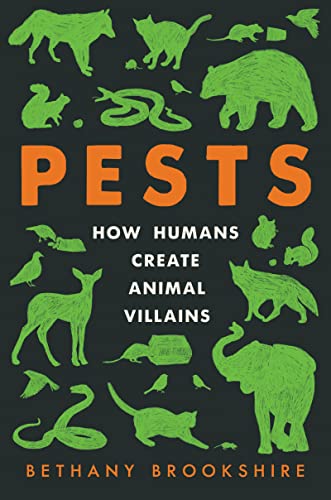 A squirrel in the garden. A rat in the wall. A pigeon on the street. Humans have spent so much of our history drawing a hard line between human spaces and wild places. When animals pop up where we don’t expect or want them, we respond with fear, rage, or simple annoyance. It’s no longer an animal. It’s a pest.