
In OPIUM QUEEN, Gabrielle Paluch shines a well-deserved light on the previously untold personal history of a woman who was thoroughly ahead of her time, and who was at the center of global events that altered the course of history..
OPIUM QUEEN:
The Untold Story of the Woman Warlord Who Ruled the Golden Triangle
by Gabrielle Paluch
Rowman & Littlefield, April 2022
 A fearless Burmese warlord, Olive Yang dressed, smoked, fought, and loved like one of the boys, rebelling against the confines of her gender from a very young age and later carrying on eyebrow-raising love affairs with a movie starlet, a General’s wife, and her own prison warden, amongst others. Beloved and revered by her soldiers, this trailblazing woman reigned over a powerful army that controlled the Golden Triangle from the end of World War II to the early 1960s, and infamously assisted the CIA in their plan to arm militias against Communist Chinese troops. Perhaps most fascinatingly of all, this female firebrand has largely been forgotten, relegated solely to the footnotes of history books. Until a few years ago, no one even seemed to know whether Olive was alive or dead. Determined to right this wrong, Gabrielle Paluch set out on a once-in-a-lifetime journey to find Olive Yang. What she found is, as they say, stranger than fiction.
Intertwining Olive’s story with her own quest to uncover it, Gabrielle Paluch raises difficult questions about the US’s covert intervention in Burma, which is largely to thank for the birth of the modern opium trade, delves deeply into questions of gender and sexuality, and takes a look at the complicated history of the nation now known as Myanmar, which remains in turmoil to this day.
Gabrielle Paluch spent six years living in Myanmar and Thailand, reporting on both countries for Voice of America, the LA Times and other publications. In 2016, she earned an MA from Columbia University’s Graduate School in Journalism and was an Overseas Press Club Scholar, awarded the H.L. Stevenson Fellowship for her groundbreaking reporting on female genital mutilation in Thailand. As an investigative reporter, Gabrielle has been a regular contributor to The Wall Street Journal, The Guardian, Associated Press, Times of London, Newsweek, CNN, Al Jazeera, and many others. She was the last journalist to meet with Olive Yang before she died. In 2017, her obituary of Olive Yang ran in the New York Times Saturday Profile; it was selected by the Times as one of the 11 best profiles of a woman that year and was nominated for a Southeast-Asian Overseas Press Award in Feature Writing.
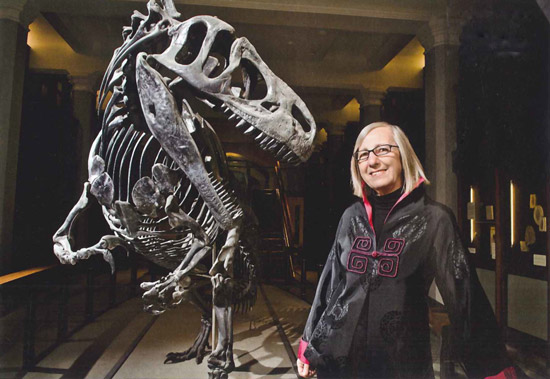 World-renowned geologist and paleontologist Gerta Keller is at the center of what has been called the nastiest feud in science, a contentious debate popularly known as “The Dinosaur Wars” over what triggered the fifth mass extinction at the end of the Cretaceous Era sixty-six million years ago. Dinosaurs have enthralled us for generations, and the question of what caused their demise is more relevant than ever, as humankind confronts the paroxysms of an imperiled planet and the possibility that we may become the dinosaurs of the sixth extinction.
 As an entrepreneur launching a girls’ health and wellness company, Kimberly Wolf found herself talking to many high-powered male investors, creatives, and advisors. But what they wanted to talk about took her by surprise. They all wanted to ask questions about their teenage daughters—what they should say to them, what they should do for them, or whether they should step aside and leave it to mom (or just wait it out).
 There is the initial pain of loss, and then there is the grieving. We have long assigned grief to the realm of nebulous emotions, but we now know that the brain creates those emotions in response to many outside factors. Neuroscientist Mary-Frances O’Connor has been studying the effects of grief on the brain and body for more than twenty years, and the clues she has found as to how we cope with loss turn out to be rooted in how we fall in love. In THE GRIEVING BRAIN, she explores this new territory and explains what happens inside the brain when we become attached to another and then lose that loved one—and why it can be so difficult to imagine a future without them. (Hint: Sometimes the brain leads us to believe the death is just not true.)
 WATER ALWAYS WINS makes clear that we need to fundamentally rethink our relationship with water. We must embrace the reality that we are an integral part of nature and need learn to live in harmony with these forces that we cannot conquer. This requires humility, not arrogance; collaboration, not aggressive control and setting a goal, which is to determine what water wants and figure out a how to make way for it, while protecting and securing our lives. The overarching theme is that such a mindset is essential in all our dealings with every aspect of nature, if we want our planet to survive. As Erica Gies so beautifully states, water is life, it “flexes with the rhythms of the earth, expanding and retreating in an eternal dance upon the land.”